

"Salty" is the short answer. The longer answer is more interesting — and more useful if you're trying to change it.
Semen taste exists on a spectrum. Most descriptions land somewhere between salty, slightly sweet, slightly bitter, and faintly metallic — but there's a real range, and it's shaped by chemistry, diet, hydration, and lifestyle.
This guide gives you the science-grounded picture: what semen typically tastes like, why descriptions vary so much, the factors that shift taste, and how to direct your own taste in the direction you want.
What's Inside
The Typical Baseline
Most healthy semen, in a man with reasonable diet and hydration, tastes:
- Mildly salty — from natural sodium and protein content
- Slightly warm — from body temperature at release
- Faintly metallic — from zinc and other trace minerals
- Slightly sweet at the edges — from natural sugars (fructose, glucose)
That's the average. Below average: bitter, sharp, sour, harsh. Above average: milder, sweeter, smoother.
What's Actually in Semen
Understanding what's in semen helps explain why taste varies and what changes it.
The Major Components
Semen is roughly 90% seminal fluid (from the seminal vesicles, prostate, and bulbourethral glands) and 10% sperm cells. Within the fluid:
- Fructose — natural sugar, primary energy source for sperm; contributes to sweetness
- Glucose — additional sugar contribution
- Citric acid — gives a slight tang; produced by the prostate
- Proteins and amino acids — these break down into byproducts that contribute bitter or sharp notes
- Zinc — trace mineral that contributes the faint metallic taste
- Calcium, magnesium, potassium — minor mineral contributors
- Sodium — the source of saltiness
- Lactic acid, urea, uric acid — metabolic byproducts that affect overall flavor balance
- Enzymes (PSA, prostatic enzymes) — functional, but contribute subtly to taste
The pH Factor
Healthy semen has a slightly alkaline pH — typically 7.2 to 8.0. The alkalinity is what gives semen its slight bitterness; more alkaline = more bitter, less alkaline = sweeter and milder. Diet, hydration, and lifestyle all shift this pH within the natural range, which is why taste shifts noticeably with changes.
Why Taste Varies So Much
Diet
Compounds from food enter the bloodstream within hours and are reflected in body secretions within 24–72 hours. Garlic compounds, asparagus byproducts, beer's hop acids, and coffee's bitter compounds all show up — sometimes dramatically.
Hydration
Water dilutes everything. A well-hydrated man's semen has all the same compounds at lower concentration, producing a milder overall taste. A dehydrated man concentrates every flavor, including the unpleasant ones.
Lifestyle
Smoking, alcohol consumption, recreational drug use, and stress all shift body chemistry directly. Smoking is the most consistent negative factor — nicotine and combustion byproducts produce harsh, chemical-like notes that diet alone can't fully overcome.
Health
General health status — inflammation levels, gut health, metabolic function — influences how the body processes everything else. Two men eating the same diet can have meaningfully different taste profiles based on overall health.
Genetics
There's a genetic component to baseline body chemistry. Some men start sweeter, some start more bitter, and the same lifestyle interventions produce slightly different magnitudes of change between individuals.
The Full Range of Descriptions
Across honest reports from partners and surveys, semen has been described as:
Common Descriptions (Most Frequent)
- Salty
- Slightly bitter
- Warm
- Slightly metallic
- Faintly sweet
- Mildly bleach-like (the protein note)
Less Common Descriptions
- Sour or tangy
- Sharp or biting
- Earthy
- Vegetal
- Astringent
The Goal Descriptions (After Optimization)
- Smooth
- Mildly sweet
- Less salty than expected
- Pleasant
- Easy to swallow
The Worst Descriptions (Things You Want to Avoid)
- Bitter / very bitter
- Chemical-like
- Sharp / acrid
- Off-putting
- Sulfurous
8 Factors That Affect Taste
1. What You Eat
The biggest factor. Sulfur-heavy foods (garlic, onions, asparagus, cruciferous vegetables) push toward bitter. Fruit-heavy diets (especially pineapple, mango, papaya) push toward sweet. Full food guide here.
2. What You Drink
Water hydrates and dilutes. Beer is the worst alcoholic offender. Coffee adds bitter notes. Pineapple juice and smoothies actively shift toward sweet.
3. How Hydrated You Are
Independent of drink choice — total daily water intake. Dehydrated men have stronger, sharper taste regardless of diet.
4. Smoking and Vaping
Consistently and significantly negative. Hard to overcome with diet alone.
5. Sleep and Stress
Chronic poor sleep and high stress raise cortisol and shift body chemistry. The effect is gradual but real over weeks.
6. Sexual Frequency
More frequent ejaculation produces slightly different taste profiles than longer abstinence — generally fresher and milder. Multi-day abstinence can produce a more concentrated, sometimes sharper taste.
7. Medications
Certain prescription drugs (antibiotics, antidepressants, blood pressure medications) affect taste. If you started a new medication and noticed a change, that's likely the cause.
8. Supplements
Targeted supplements — particularly pineapple extract with bromelain — actively support sweeter, milder taste. High-dose B-complex or zinc above 50mg can shift taste in the opposite direction.
How to Test Changes
If you're trying to improve your taste, the only reliable test is honest partner feedback. Self-tasting is possible but the perception is different than someone else's.
The Comparison Test
- Get an honest baseline — partner feedback before any changes
- Make one significant change (e.g., cut beer for two weeks)
- Get a follow-up reading after the change has had time to take effect
- Compare
The Stack Test
If you want to make multiple changes (cut beer + add pineapple supplement + increase water), run them all simultaneously rather than one at a time. The compound effect is what produces noticeable change. Save the "isolate variables" approach for after you've established that the stack works.
What's Realistic
Going from "really bitter" to "actively sweet" is not the goal — that's a change of 2–3 categories. Realistic improvement is going from "noticeably bitter" to "milder, more pleasant" — 1 category of improvement. That's actually meaningful in real-world feedback.
A Framework for Better Taste
Layer 1: Foundation
- Drink 2.5–3+ liters of water daily
- Get 7+ hours of sleep most nights
- Manage stress with whatever works for you
Layer 2: Subtraction
- Reduce or eliminate smoking
- Cap coffee at 1 cup daily
- Cut beer significantly; moderate other alcohol
- Limit garlic, onions, and cruciferous vegetables in the days before intimacy
Layer 3: Addition
- 1–2 servings of pineapple, mango, or other tropical fruit daily
- Berries and citrus in regular rotation
- Parsley, mint, and chlorophyll-rich greens
- Plain yogurt for gut health
Layer 4: Acceleration
- A daily pineapple extract supplement to compress the timeline and lock in baseline
- Optional: zinc within recommended dose (under 30mg daily)
- Optional: probiotics for overall gut health
Frequently Asked Questions
Is there a "normal" semen taste?
Yes — slightly salty, faintly metallic, mildly bitter at the edges, sometimes faintly sweet. This is the typical baseline for healthy men with reasonable diets and hydration. Variations from this baseline are normal and shaped by lifestyle.
Why does my semen taste different at different times?
Diet, hydration, sleep, stress, and sexual frequency all shift on rolling cycles. The taste you have today reflects the last 24–72 hours of input. Same person, different week, can taste meaningfully different.
Can semen taste indicate a health problem?
Subtle taste variations are normal and harmless. A sudden, persistent change combined with other symptoms (pain, unusual color or smell, fever) is worth raising with a doctor. Routine variation is not a medical concern.
Does abstinence make taste better or worse?
Multi-day abstinence tends to produce more concentrated, sometimes sharper taste. More frequent ejaculation produces fresher, milder taste in most men.
Why does my partner describe a different taste than I taste myself?
Self-perception of taste is influenced by your own oral chemistry and is generally less sensitive than a partner's perception. Trust their feedback over your own reading.
What's the single most impactful change I can make?
For most men: aggressive hydration. It's the most underrated factor and often produces noticeable improvement within 2–3 days. After that: cut beer and add daily pineapple in some form.
How long until lifestyle changes show in taste?
Diet and hydration changes typically show in 24–72 hours. A full taste shift after sustained changes takes 2–4 weeks. Full timeline guide here.
The Honest Answer
Semen taste isn't fixed. It's a real-time reflection of what's in your body, and it responds to consistent lifestyle changes within days to weeks. The realistic goal isn't "actively sweet" — it's "noticeably better than baseline." That's an achievable, partner-detectable improvement that most men can sustain.
The Easiest Way to Shift Your Taste
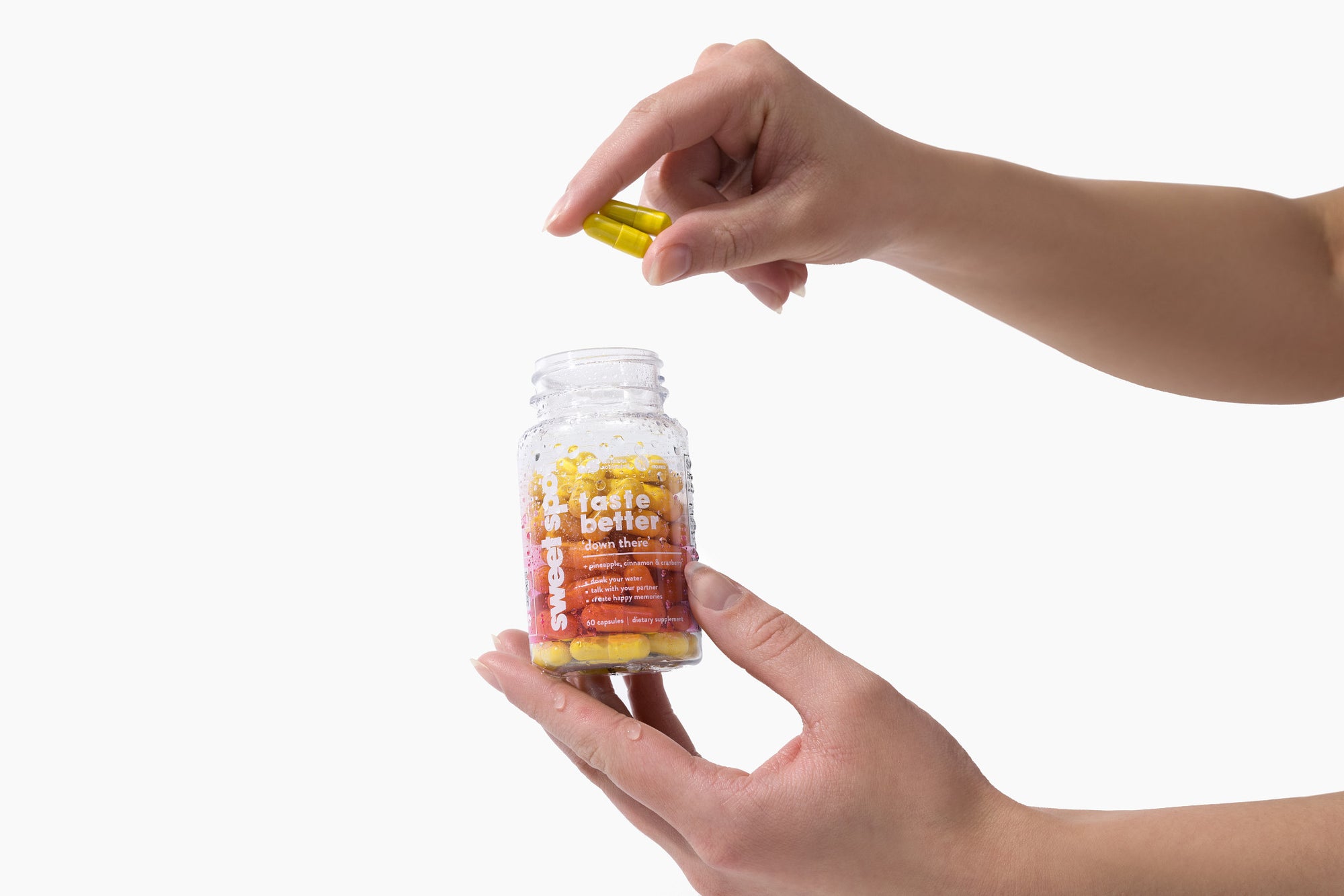
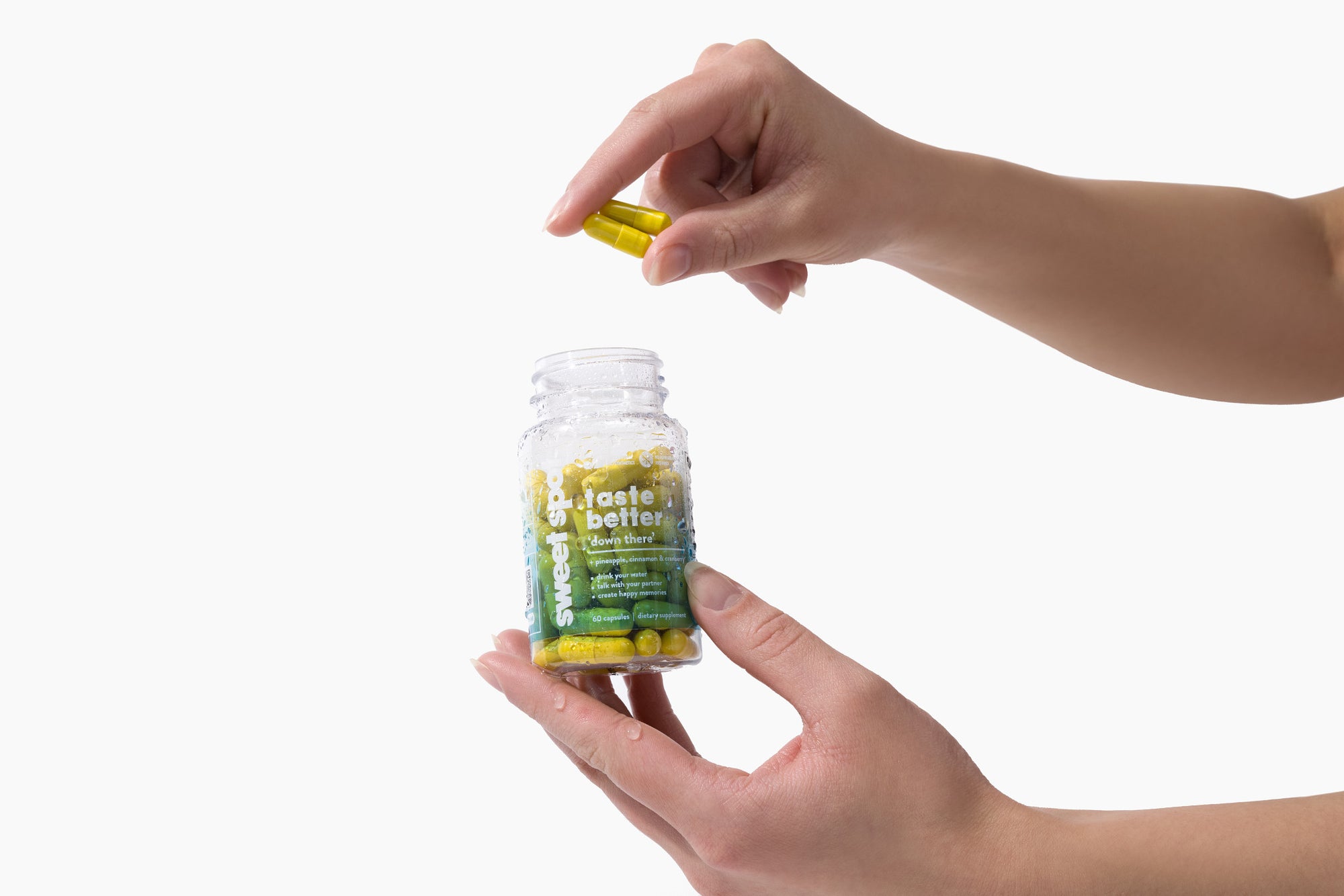
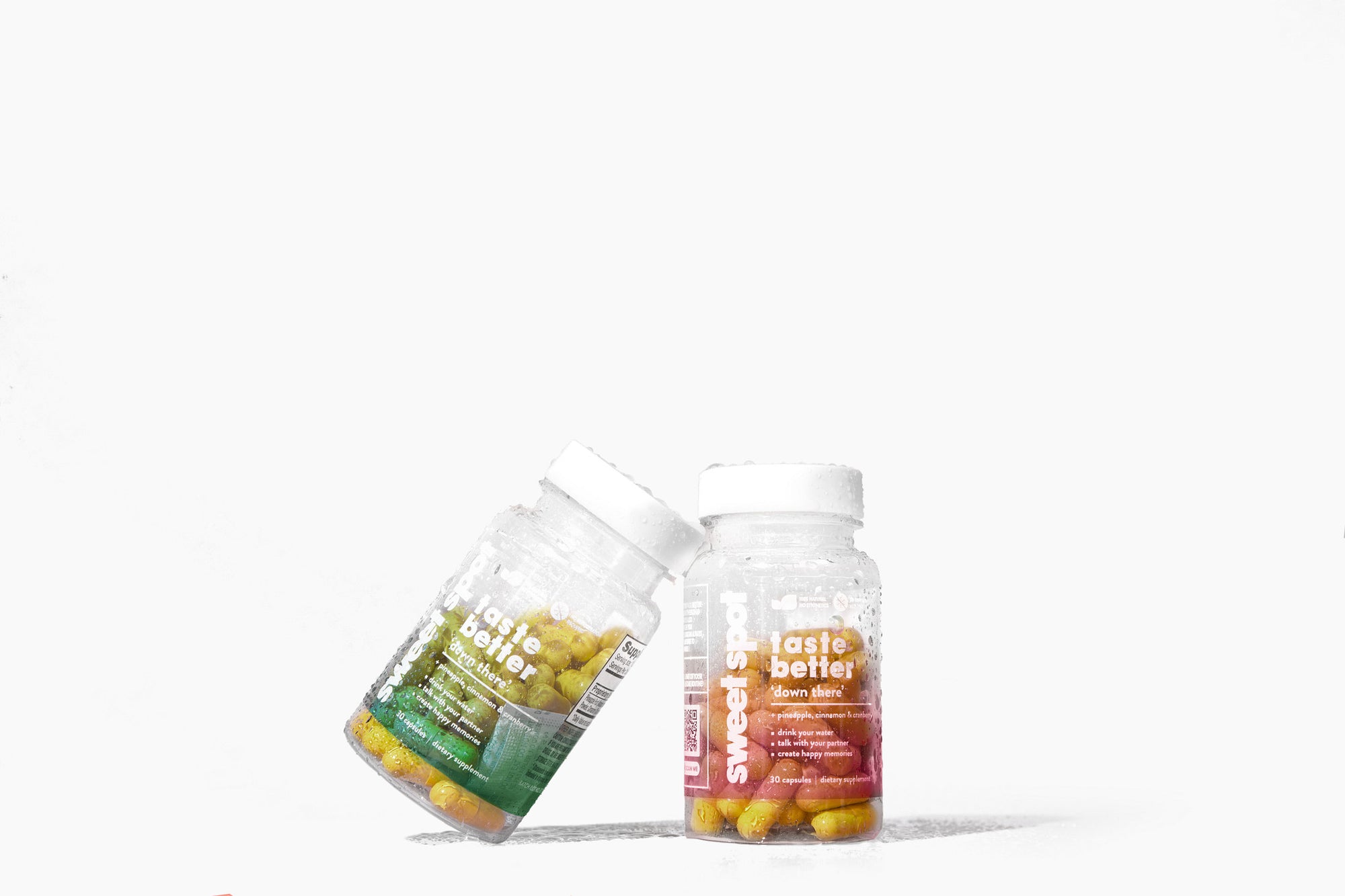
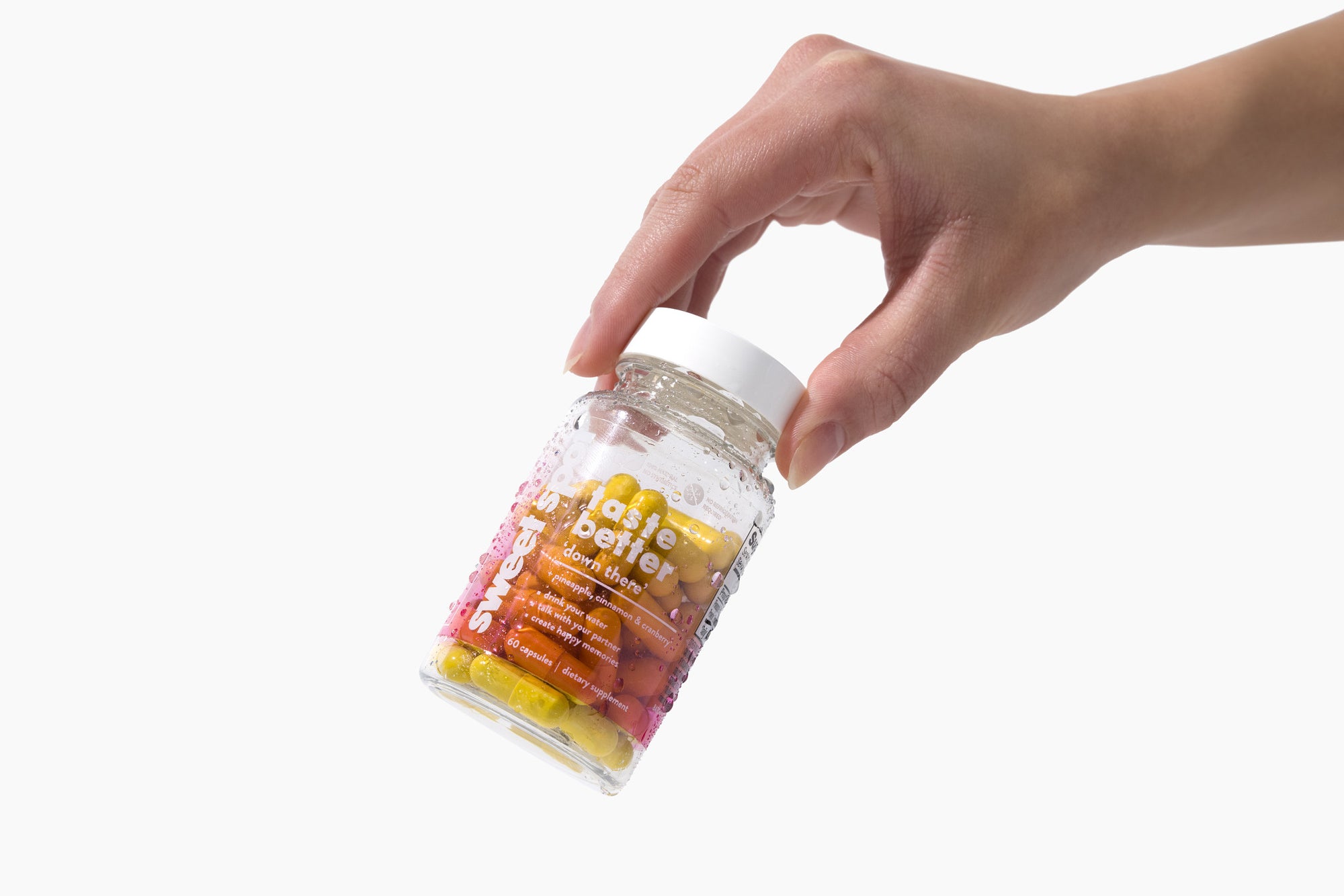
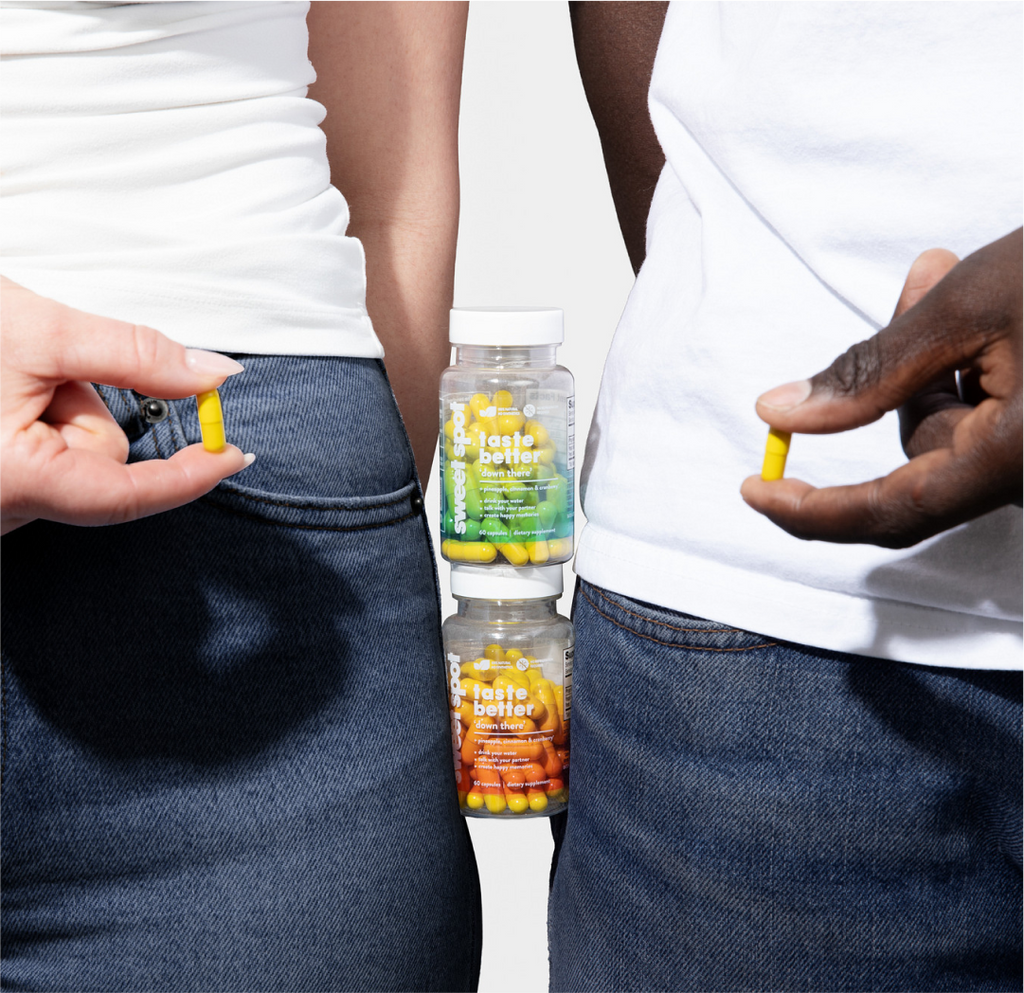
FOR HIM combines concentrated pineapple extract (bromelain), chlorophyll, cranberry, and cinnamon into one daily capsule that shifts taste in the right direction without requiring perfect diet.
- Concentrated bromelain for taste shift
- Chlorophyll for bitter neutralization
- 60 capsules / 30-day supply
- Made in the USA, no artificial fillers
For couples working on this together, the His + Hers Bundle includes both men's and women's formulas at a couples price.