Female Health
Fermented Foods and Vaginal Health: What to Know

Pineapple-extract supplement. 60 capsules · 30-day supply.
Shop For Her →
Many people connect fermented foods and vaginal health as if a jar in the fridge could stand in for an exam. Yogurt, kefir, kimchi, and sauerkraut are foods, and they can be a pleasant part of your diet if you tolerate them. But the idea that gut microbes then reset vaginal chemistry is not a proven treatment path. Enjoy them at the table, never put food inside your body, and take symptoms to a clinician.
The Short Answer
Fermented foods belong in the kitchen. Their live cultures vary by brand and batch, so they are not a measured medical probiotic or a treatment. Do not put them in the vagina. Kombucha can contain sugar and some alcohol, so treat it as a drink rather than care, and see a clinician for fishy odor or itching.
What Counts as a Fermented Food?
Common fermented foods include:
- Yogurt
- Kefir
- Kimchi
- Sauerkraut
- Kombucha, a fermented tea
Each batch differs, so a tangy cup is not a standardized dose, and no honest article can invent one. If your stomach handles them well, they can be part of meals you enjoy. If they bloat you, you can skip them without failing any wellness test.
It also helps to know that not every jar on the shelf still contains live cultures. Some fermented products are heat-treated for shelf life, and heavily sweetened yogurts sit closer to dessert than to a health food. None of that is a problem if you simply like the taste. It is just one more reason that fermented foods work best as part of your meals, judged as food, rather than as a measured health product.
Food is allowed to simply be food. It does not become intimate care because a social media caption drew an arrow from the gut to the pelvis. Nobody is behind because their fridge is plain.
Can Fermented Foods Improve Vaginal Health?
You will often see a simple story: feed your gut, and vaginal comfort follows. Parts of microbiome science are real and still developing. But that story is not a proven treatment path for odor, discharge, or itching.
Fermented foods and vaginal health can share a paragraph in a blog without sharing a result you can count on. Association, tradition, and hope are not an exam. If your clinician has talked with you about diet in general, follow their advice.
Symptoms that smell fishy or feel new belong in a clinic, whether you eat fermented foods daily or never. For a closer look at one popular choice, see our article on kefir and intimate health, and for yogurt specifically, where yogurt for vaginal health belongs.
Why You Should Never Insert Food
Please do not insert yogurt, kefir, kimchi, sauerkraut, or any other food into the vagina. There is no safe home method to teach here, because food is not a suppository and a kitchen is not a pharmacy.
People sometimes try it because a forum made it sound natural and cheap. But the vagina does not need a meal, and internal washing is unnecessary for the same reason. Our article on why douching backfires explains how internal products can upset a healthy balance.
If you have already tried it and now feel itching or burning, stop and tell a clinician exactly what you used. Do not follow one experiment with another food.
Is Kombucha Good for Vaginal Health?
Kombucha is fermented tea, and bottles vary a lot. Many contain sugar, and some contain a small amount of alcohol even when sold as soft drinks. That does not make kombucha bad, and there is no need to feel guilty about a glass.
It does mean kombucha is a poor thing to call medicine. Marketing sometimes slides it into the same healthy halo as yogurt, but it is not a treatment for discharge. If you watch sugar for other reasons, read the label. If you avoid alcohol, check before assuming a bottle is alcohol-free. When in doubt, choose a food you understand or skip the drink.
Fermented Foods and Vaginal Health Aside, How to Actually Enjoy Them
Take away the medical promises and fermented foods are simply good to eat. Some easy ways to work them into a normal week:
- A spoonful of kimchi on fried rice, eggs, or a grilled cheese
- Sauerkraut piled on a sausage, a Reuben, or a grain bowl
- Kefir blended with frozen banana and berries for a quick breakfast
- Plain yogurt with honey and walnuts, or thinned with lemon as a dip
Start with small amounts if they're new to you. Your stomach will tell you what it likes, and if the answer is none of them, your meals are fine without.
Is a Probiotic Capsule the Same as a Jar of Yogurt?
No. A capsule and a fermented food are different objects. A probiotic supplement contains specific organisms in a set form, while fermented foods vary by batch. Neither one is a treatment for infection.
If you are comparing products, our guide on how to read a probiotic label helps you see what is actually inside. And if you feel well, you do not need either a capsule or a new ferment to be healthy.
When to See a Doctor
Food will not replace a visit. See a clinician if you have:
- A fishy odor or unusual discharge, including thick discharge
- Itching or pelvic pain
- Fever
- Burning that started after you put something in the vagina, and tell them what it was
A clinician may prescribe medication after an exam; this article will not name a drug or a dose. Do not insert food while you wait, and call sooner if you are pregnant. This is general information, not medical advice.
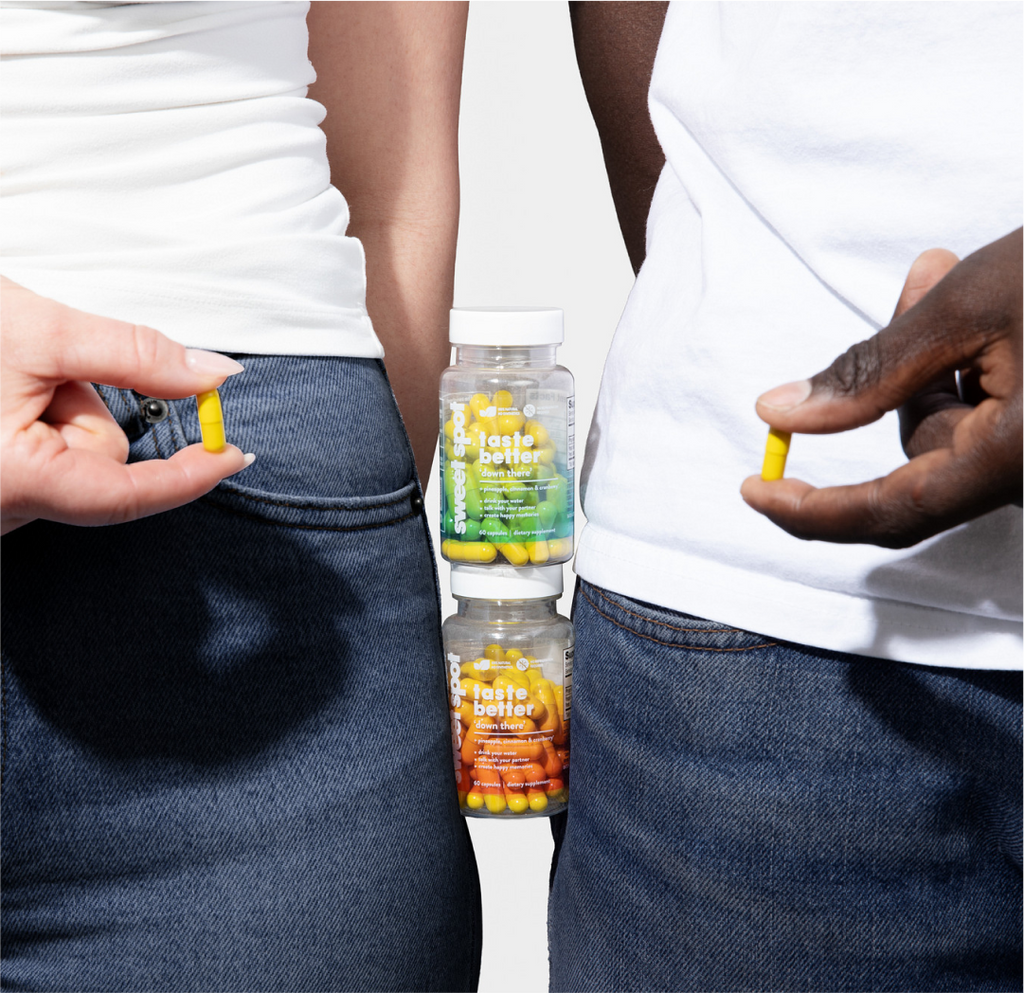
If you would like a simple daily routine to sit alongside your meals, Women's Sweet Spot is a probiotic-friendly dietary supplement featuring pineapple extract to support intimate pH balance and natural freshness, taken as two capsules daily with water. It is swallowed, not a food, and it is not a treatment. Please do not start it during pregnancy or breastfeeding unless your obstetric clinician agrees. Browse more in the full collection.
Frequently Asked Questions
Will eating yogurt get rid of vaginal odor?
No. If you notice a new smell and your first thought is to eat more yogurt, the smarter move is to book an exam and keep your breakfast as it is. Odor has causes a clinician can test for, and a cup of yogurt can't tell you which one you have. Enjoy it as food while you wait for answers.
I've seen yogurt-soaked tampons suggested online. Is that safe?
No. Soaking a tampon or applicator in yogurt, kefir, or any food and inserting it is still putting food in the vagina, just with extra steps. It can irritate tissue and delay a real diagnosis. If you've already tried it and now have burning, itching, or unusual discharge, stop and tell a clinician exactly what you used and when.
Can fermented foods upset my stomach?
They can, especially if you're new to them. Gas and bloating are common at first, so start with a forkful rather than a bowl. Kimchi and sauerkraut are also often quite salty, which matters if you watch sodium for blood pressure or another reason. If they keep disagreeing with you, skip them. Your meals don't need them.
Is kombucha okay during pregnancy?
Ask your obstetric clinician, because some bottles contain a small amount of alcohol even when they're sold as soft drinks, and the amount isn't always listed clearly. Many people choose to skip it while pregnant for that reason. Water, sparkling water with fruit, or plain milk are easy swaps if you want something that needs no checking.
Do I need to eat fermented foods every day?
No. There's no required daily amount for intimate health, and anyone who names one is inventing it. If you enjoy kimchi twice a week and yogurt now and then, that's a perfectly good pattern. If you never eat them, you're not missing a hidden treatment. A varied diet you actually like matters far more than any single jar.
YOUR NEXT STEP, ON YOUR TERMS
Keep it simple.
Find your routine.
Explore daily supplements and external-care essentials. Our products are not treatments for medical conditions; speak with a qualified clinician about symptoms or health concerns.

Or explore other products: