Female Health
Why Douching Is Bad for Your Vagina, and What to Do Instead

Pineapple-extract supplement. 60 capsules · 30-day supply.
Shop For Her →
If you're wondering why douching is bad, the answer has nothing to do with technique. The vagina is a living environment, and rinsing it on purpose is associated with upsetting that environment. Wanting to feel fresh, or worrying about scent or discharge, is completely understandable. The kindest advice is still simple: don't douche. Gentle care for the outside is all your body needs.
Quick Answer
Douching is associated with upsetting the vaginal environment, so the best approach is to stop rather than look for a gentler method. Washing the outside, the vulva, with water is a different thing entirely. If you notice odor along with itching or pain, see a clinician instead of rinsing.
Why Do People Douche in the First Place?
Most people who douche are chasing a feeling. Maybe it's more discharge than expected, a scent after a period or after sex, a comment from someone, or an ad suggesting a vagina should smell like flowers.
That goal often rests on a misunderstanding of what's normal. Discharge has a job to do, and a mild scent can be completely ordinary. Trying to erase both from the inside treats living tissue like a cup you can empty. The feeling you want, clean and unembarrassed, is human. It's the tool that causes trouble. If you're unsure what's typical, our guide to what normal vaginal discharge can look like is a reassuring place to start.
Why Douching Is Bad for Vaginal Balance
Clinicians and patient guides have long associated douching with an upset vaginal environment. In other words, rinsing inside is linked with the very imbalance people hope to wash away. That's the backfire.
It isn't a rare problem that only happens to people who "did it wrong," and there's no correct version being kept from you. If a relative taught you to douche, you can stop without needing a replacement ritual of the same shape. Stopping is the step that helps.
How to Stop Douching if It's Been a Habit for Years
For some people, douching has been part of their routine since their teens, often taught by a parent or picked up from ads. Letting it go can feel strange at first, as if you've skipped a step. That feeling usually fades once you notice that your body keeps itself in balance without the extra help.
- Put the bottles away, or throw them out, so they're not part of your morning.
- Swap the habit for a quick rinse of the outside in the shower.
- Give yourself a few cycles to get used to your natural, mild scent.
- Keep track of anything new, like itching or a fishy smell, and get it checked rather than reaching for a rinse.
You don't need a replacement product of the same shape. Stopping is the whole intervention, and you can start today.
Is Douching With Water or Vinegar Any Safer?
No. Whatever goes in the bottle, the issue is the internal rinse itself. That includes:
- Plain water
- Vinegar or homemade mixes
- Scented or perfumed douches
- Store-bought bottles labeled gentle, natural, or pH-balanced
Scented versions add fragrance to tissue that already reacts poorly to it, which we explain for the outside in fragrance and vulvar skin. A softer-sounding label doesn't change the category. A douche is still a douche.
How to Keep the Vulva Clean Without Douching
The outside and the inside are different surfaces with different needs. The vagina looks after itself. The vulva, the external skin, is where everyday hygiene belongs.
- Rinse the vulva with water in the shower.
- Wear breathable cotton underwear.
- Change out of wet or sweaty clothes when you can.
- If you use a wipe, keep it on the outside only.
None of these is a disguised douche, and none is a treatment. For more on gentle cleansing, see what to know about soap on vulvar skin and our complete guide to pH-balanced intimate wipes.
What to Do About Vaginal Odor Instead of Douching
A new fishy odor, especially with thin discharge, itching, or irritation, is a reason to see a clinician, not a reason to rinse. Itching with thick discharge is also worth getting checked. These patterns can be hard to tell apart at home, and rinsing can muddy the picture.
While you wait for an appointment, skip internal products and stick to washing the outside with water. If a partner's comment is only about a normal scent, the conversation is about reassurance, not a bottle. You don't need a product to feel confident about a healthy body.
It can help to remember that a vagina isn't supposed to smell like nothing, or like perfume. A light, natural scent that changes a little across your cycle, after exercise, or after sex is part of normal life. What deserves attention is a change that's new, strong, or paired with other symptoms.
What About Odor After Your Period?
Blood has its own scent, and a mild change around your period can be perfectly ordinary. That isn't a reason to douche. Water on the vulva is enough on period days.
If the odor is strong or fishy, or comes with itching or pain, get it checked. Our article on period blood and vaginal pH explains why things can shift around your cycle.
When to See a Doctor
See a clinician if you notice any of these:
- Fishy odor or unusual discharge
- Itching or burning
- Pelvic pain or fever
- Bleeding you can't explain
Tell your clinician if you've been douching, because that context helps, and then stop. There's no need for a last rinse before the visit. An exam is how these symptoms get sorted out. This article is general information, not medical advice.
Gentle Products for an Outside-Only Routine
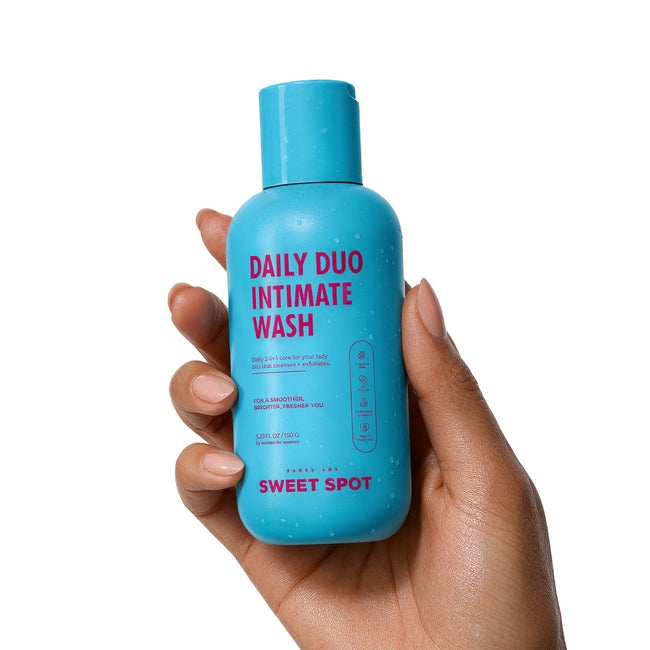
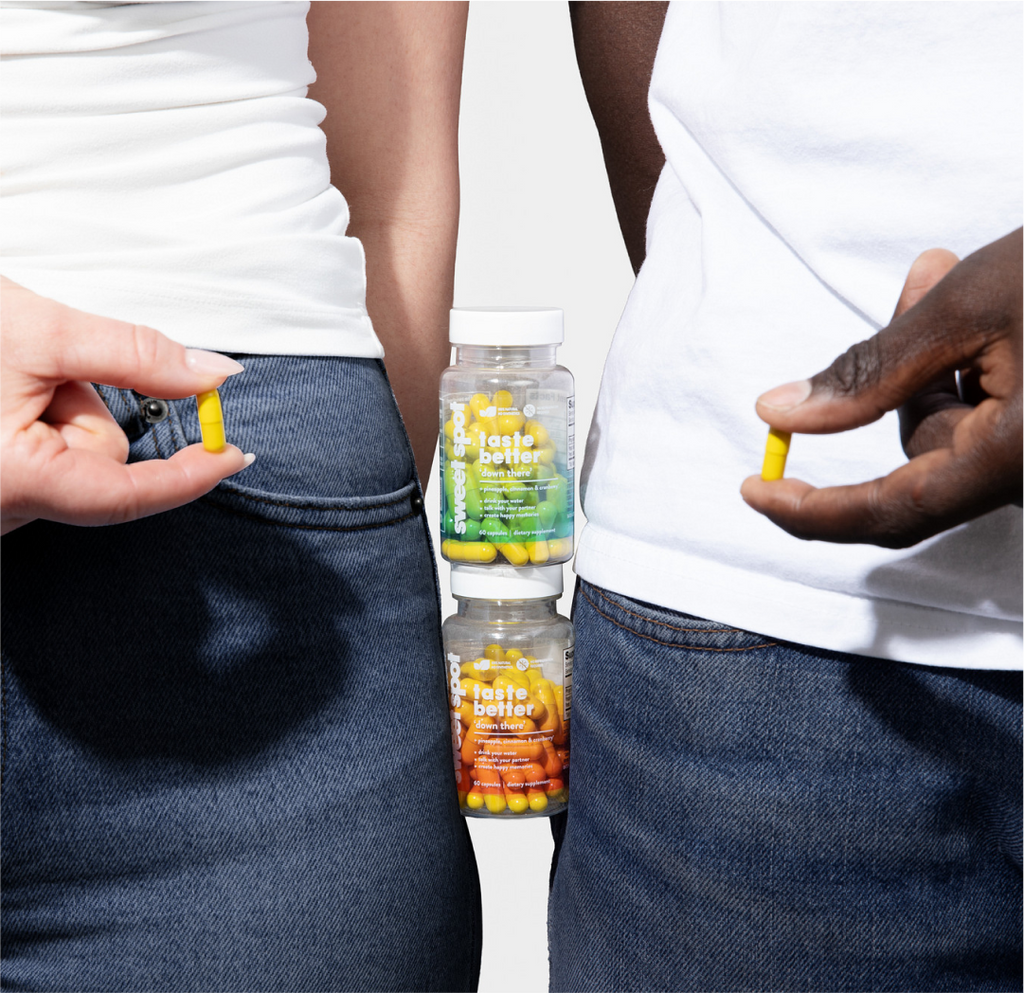
If you like a quick refresh on busy days, Sweet Spot Intimate Wipes are pH-balanced, wipes with aloe, made for external use on the vulva only, never as an internal rinse. For an everyday freshness habit from the inside, Sweet Spot For Her is a probiotic-friendly pineapple-extract dietary supplement, taken as two capsules a day with water. Neither one is a douche or a treatment, and you don't need to buy anything to quit douching.
Frequently Asked Questions
Is douching ever recommended by doctors?
Douching isn't part of standard advice for everyday hygiene. If a clinician ever prescribes something to use vaginally, it will be a specific medicine with specific instructions, which is very different from a store-bought rinse. If you're unsure whether something counts, ask at your next visit before using it.
Are vaginal steaming or "detox" pearls safer than douching?
They raise the same concern: putting heat, herbs, or products where the vagina doesn't need them. None of them is a gentler way to clean the inside, and the marketing around them tends to borrow the same shame that sells douches. Skip them. A water rinse on the outside covers your hygiene needs.
Can a probiotic capsule replace douching?
It isn't a replacement rinse, because you don't need to rinse at all. An oral capsule is swallowed with water as part of a freshness routine, and it isn't a wash or a treatment. Quitting douching doesn't require starting any product. Those are two separate decisions.
What should I use after sex instead of douching?
Pee if you like, rinse the vulva with water, and pat dry. That's it. Semen can change your scent for a little while, which is ordinary. If you notice a strong fishy smell that lingers for days, or itching or burning, see a clinician rather than reaching for a rinse.
Should I tell my doctor that I douche?
Yes. It gives your clinician useful context for any symptoms, and there's no judgment in it. Many people learned it from family or ads. Mention how often you douched and with what, skip the rinse before your appointment, and let the exam sort out what's going on.
YOUR NEXT STEP, ON YOUR TERMS
Keep it simple.
Find your routine.
Explore daily supplements and external-care essentials. Our products are not treatments for medical conditions; speak with a qualified clinician about symptoms or health concerns.

Or explore other products: