Female Health
Vaginal Taste Myths: What Doesn't Change Taste, and What Helps

Pineapple-extract supplement. 60 capsules · 30-day supply.
Shop For Her →
Vaginal taste myths are everywhere, and many of them push habits that do nothing helpful or cause irritation. Vitamins taken for flavor, perfume on underwear, douching, and putting oils, yogurt, or vinegar inside don't belong in your routine. No vitamin directly changes vaginal taste or odor. The good news is that the habits that actually respect your body are simpler than the ones sold to "fix" it.
Quick Answer
Flavor vitamins, scented sprays on fabric, douching, and kitchen ingredients placed inside the vagina don't reliably change taste, and the internal ones can cause irritation. Gentle water on the outside, unscented products, and breathable underwear are the low-key alternatives. If you notice a fishy smell, itching, or pain, a clinician is the step that matters.
Why Vaginal Taste Myths Catch On
It helps to start with what's normal. Vaginal taste and scent naturally vary with your cycle, arousal, sweat, and general health. There's a wide range of ordinary, and a body that tastes a little different from one week to the next isn't doing anything wrong.
That variability is exactly why so many quick fixes get marketed. If you'd like the full picture of what makes up vaginal taste, and why it shifts across the month, see what vaginal taste is made of.
Myth: Can Vitamins Change How You Taste?
The supplement aisle suggests that if you swallow the right letter, your body will cooperate. It doesn't work that way. No vitamin directly changes vaginal taste or odor, and vitamin C, zinc, and the rest don't get a special pass.
Taking a vitamin you're genuinely low in, for a reason a clinician identified, is a real health step with its own goal. Taking one for a partner's preference mixes two very different goals. You might enjoy spending that money on food you love instead. Food isn't a proven flavor switch either, but at least lunch has a purpose you can taste. We look at the food question honestly in diet and vaginal taste.
Myth: Does Perfume on Underwear Help?
Spraying fragrance on fabric near the vulva adds a chemical note and can irritate skin that didn't need it. It doesn't change your natural secretions. The same goes for scented liners and fragranced wipes designed to smell like a fruit.
These products are popular because they're fast, but fast isn't the same as kind to your skin. If you notice a leftover product taste, go the other direction: unscented detergent, no fragrance near the vulva, and plain water on the outside. Our guide to fragrance and vulvar skin explains why unscented is the gentler choice.
Myth: Does Douching Make You Taste Better?
No. Douching isn't a fix or a fresh start, and it can irritate tissue and blur symptoms that a clinician needs to see. The vagina cleans itself, so the right amount of douching is none. There's no gentle method or ideal schedule to look for. We cover the reasons in detail in why douching backfires.
Myth: Are Yogurt, Oils, or Vinegar Safe to Use Inside?
Kitchen remedies come up a lot online, but none of these belong inside the vagina:
- Yogurt
- Oils, including coconut or essential oils
- Vinegar
- Garlic
- Juice
- An opened supplement capsule
Several of these can irritate delicate tissue or mask symptoms. Some studies of vaginal products are clinician-guided, but a home kitchen isn't a clinical study. If you've already tried an internal remedy, there's no need for embarrassment. Simply mention it to a clinician and stop repeating it.
Myth: Does Washing More Often Make You Fresher?
It's tempting to think that if a little washing is good, more must be better. In reality, the vulva does best with a gentle touch. Repeated scrubbing, harsh soaps, and stacks of scented wipes can leave skin tired and irritated, and irritated skin rarely feels fresh.
A last-minute wipe that exists only to smell like fruit falls into the same trap. Once a day, plus a rinse after sweating, is plenty for most people. If you feel the need to wash constantly because of an odor that won't go away, that's a sign to see a clinician rather than to wash harder.
What Actually Helps With Freshness?
The habits that work are refreshingly boring. They don't promise to rewrite your flavor; they just reduce the extra scent that sweat and products add:
- Rinse the vulva with water. Plain water on the outside is enough for most people.
- Choose breathable underwear. Cotton and other breathable fabrics help keep things comfortable.
- Shower after sweating. A quick rinse after a workout makes a real difference to how you feel.
- Go unscented. Use fragrance-free detergent and skip scented liners and sprays.
Why Stopping Is the Real Upgrade
Letting go of these myths can be a relief. You can stop the vitamin you bought only for flavor, stop the perfume, and stop any internal experiment. You don't owe anyone a body project. A kind partner will understand that, and if they want to talk it through, our guide on how to talk to your partner about taste can help.
If you do have symptoms, simplifying your routine also makes a clinician's job easier, since fewer products means clearer clues. Pregnancy is an especially good time to stop improvising and add nothing new unless your obstetric clinician agrees.
When to See a Doctor
Dropping unhelpful habits doesn't replace care. See a clinician if you have:
- A fishy odor
- Itching or burning
- Pelvic pain or fever
- Unusual bleeding
- Pain when you pee
Be honest about any internal remedies you've tried so the exam is accurate. During pregnancy, don't add a supplement unless your obstetric clinician agrees, and don't douche. This article is general information, not medical advice.
A Simple Routine, If You Want One
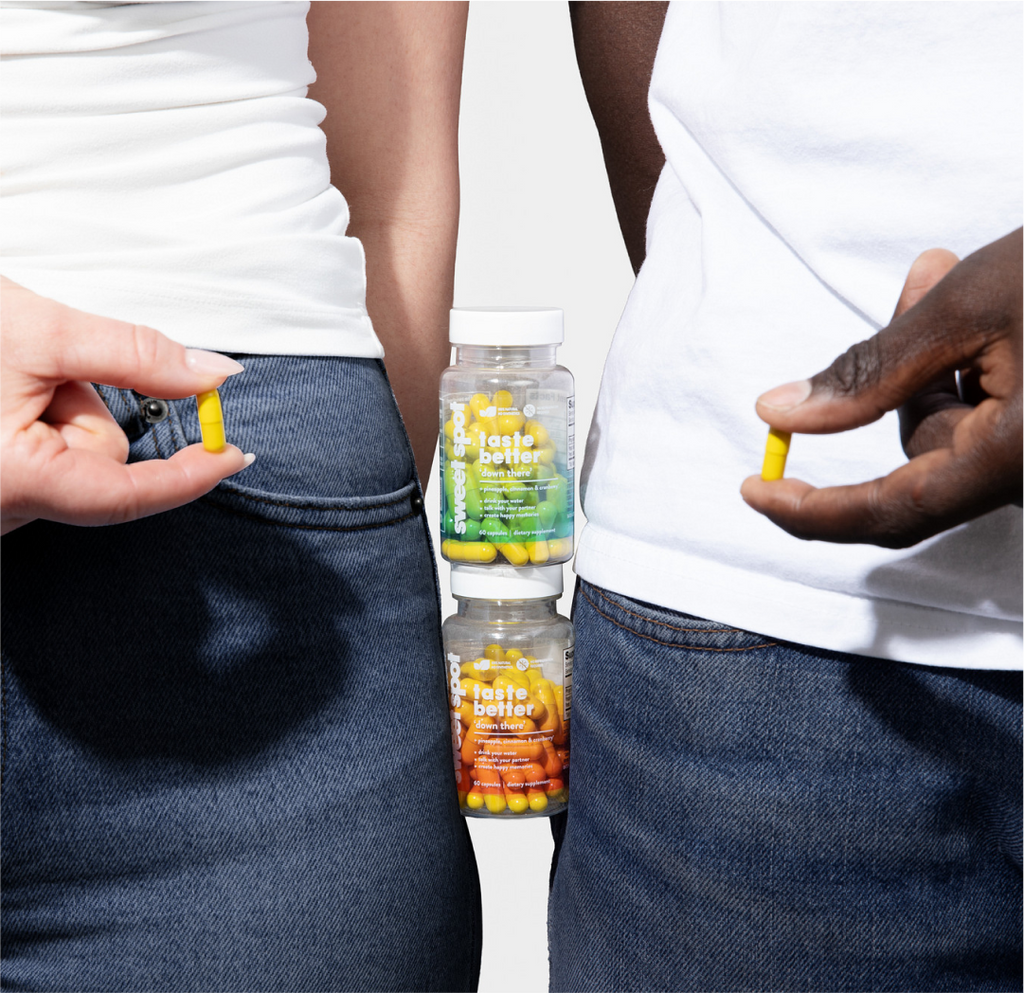
Once the myths are cleared out, some people still like a small daily freshness habit. Women's Sweet Spot combines pineapple extract in a probiotic-friendly dietary supplement to support natural freshness, at two capsules daily with water. It's swallowed, never used internally, and it isn't a substitute for douching, since douching is best simply dropped. It isn't a treatment and doesn't guarantee any change in taste. Think of it as an optional part of everyday wellness, not a requirement.
Frequently Asked Questions
Does eating pineapple make you taste sweeter?
No food has been shown to work as a reliable flavor switch, pineapple included. Enjoy it because it's delicious and a good part of a varied diet, not as a pre-date ritual. If you've been eating fruit for weeks hoping for a change, it's fine to stop keeping score and simply eat what you like.
Should I stop a vitamin I bought only for taste?
If taste was the only reason, yes, you can stop. If the same vitamin was also recommended for a real deficiency, such as low vitamin D on a blood test, keep taking it and ask your clinician before changing anything. The goal is that every bottle in your cabinet has a reason you could explain.
I already put vinegar or yogurt inside. What now?
Stop, and don't try to wash it out from the inside. A gentle rinse of the outside with water is enough. Over the next few days, watch for burning, itching, swelling, or unusual discharge. If any of those show up, see a clinician and tell them exactly what you used. Nobody there will be shocked.
Why do I taste different at different times of the month?
Your cycle changes discharge, scent, and taste, and so do your period, arousal, and a sweaty day. Most of that is ordinary range, not a problem to correct. What's worth noticing is a change that's new for you and sticks around, especially a fishy smell, itching, or discharge that looks different from your usual.
Will drinking more water change how I taste?
Staying hydrated is good for your whole body, but it isn't a proven way to change vaginal taste. Drink because you're thirsty and because it helps you feel well. If you're chasing a specific flavor through water, food, or supplements, that's a sign to set the project down rather than add another step.
YOUR NEXT STEP, ON YOUR TERMS
Keep it simple.
Find your routine.
Explore daily supplements and external-care essentials. Our products are not treatments for medical conditions; speak with a qualified clinician about symptoms or health concerns.
Or explore other products: