Female Health
What Does a Vagina Taste Like? An Honest, Shame-Free Answer

Pineapple-extract supplement. 60 capsules · 30-day supply.
Shop For Her →
What does a vagina taste like? For most people, the honest answer is mild. Sometimes it's a little tangy or sour, sometimes faintly metallic, and it shifts with your cycle, with sex, and around your period. That's a range, not a score, and nobody needs to hit a particular note before being close to someone. A strong fishy change with discharge is the one thing that moves the conversation from taste to a clinic.
The Short Answer
Expect a range: mild most of the time, tangy when natural acidity is part of the picture, metallic near blood. It changes across the month and isn't a measure of cleanliness. No vitamin directly changes taste, and a strong fishy smell with discharge deserves an exam.
What Does a Vagina Taste Like for Most People?
Bodies aren't identical, so one adjective was never going to cover everyone. Mild is a fair center for a lot of people. Tangy shows up when the vagina's normal acidity is doing its job. Metallic appears around a period far more often than marketing admits.
Arousal matters too. It changes how much fluid there is, which changes what a partner notices, without turning you into a different person. Anyone selling one correct flavor is selling fiction, and you're free to decline it. If you want the science behind the ingredients (secretions, pH, semen, products), our explainer on what affects vaginal taste covers it piece by piece.
Is a Tangy or Sour Taste Normal?
Usually, yes. A slightly sour note tracks with the acidic environment that's common during the reproductive years. Partners sometimes mention it with surprise, as if surprise meant something was off. It doesn't.
Here's a wry twist: scented soap often makes things worse. It swaps an honest tang for a chemical one. If you want to feel fresh after a workout or sex, rinsing the vulva with plain water does the job. Washing inside isn't freshness, and douching is never the fix.
Tangy becomes a medical question only when other things join it. Burning, itching, a new fishy smell, or a change in discharge are new information, and they belong with a clinician rather than in a debate about manners.
Why Can It Taste Metallic Sometimes?
Blood tastes metallic, so the days just before, during, and after a period can read that way. Brown spotting at the tail end of a bleed can do it too. That's ordinary.
What isn't ordinary is metallic taste alongside pain, a foul smell, itching, or bleeding outside your usual pattern. Those deserve a visit. Our piece on how the menstrual cycle shifts vaginal taste walks through the month week by week.
What Doesn't Change Vaginal Taste
A whole industry would like you to believe otherwise, so it helps to be plain about this. These don't reliably change taste:
- Vitamins. No vitamin directly changes vaginal taste or odor.
- Scented washes and sprays. They add perfume and often irritation, not a better flavor.
- Douching. It's linked with upsetting the vaginal environment.
- A single fruit or meal the night before. Anecdotes are fun, but they aren't trials.
Freshness products don't grade you either. For the longer list, see what does not change vaginal taste.
How Should Partners Talk About Taste?
Questions about taste can arrive dressed as curiosity and land as criticism. Nobody owes anyone a fruit comparison, and porn is a poor anatomy teacher.
If you're the partner, describe what you notice without a verdict. "I like this" goes a long way. "You taste different today" is fine if it's said with warmth and followed by a check-in rather than a suggestion to buy something. Accept a boundary if the other person doesn't want the topic at all.
If you're the one being asked, you can answer, postpone, or decline. Curiosity about your own body is allowed too, without turning it into a project. Our kind partner guide to vaginal taste has phrases that keep things warm on both sides.
What If You Feel Self-Conscious About It?
Lots of people do, often because of one offhand comment years ago or a joke that stuck. It's worth saying clearly: a healthy vagina isn't supposed to taste like candy, and it isn't supposed to taste like nothing.
A few things tend to help. Shower or rinse with water beforehand if that makes you feel more relaxed, purely for your own comfort. Tell a partner what you're worried about, because saying it out loud often shrinks it. And notice who makes you feel good about your body. A partner who enjoys you as you are is worth more than any product promising to change you.
If the worry has started to keep you from intimacy you'd otherwise want, it can help to talk it through with a clinician or a sex-positive therapist. That's a common reason people seek support, and it isn't a sign anything is wrong with you.
When a Fishy Smell Changes the Conversation
A strong fishy smell, particularly with thin discharge, is a reason to be examined for problems such as bacterial vaginosis. Yeast more often itches. You don't need to name it correctly before you call. That's the clinician's job.
Two things to skip before the visit: douching to seem more presentable, and starting a vitamin because someone online said odor is a deficiency. Neither helps, and douching can blur the picture. Read why fishy odor starts with a clinician for what to expect.
When to See a Doctor
A range of ordinary taste isn't a diagnosis. A sudden foul change might be. Book an appointment for:
- A strong fishy smell or unusual discharge
- Itching or burning
- Pelvic pain or fever
- Bleeding that isn't your period
- Pain when you pee
Don't wait to see whether a different vitamin improves things. If you're pregnant, call your obstetric clinician, and don't add a supplement unless they agree. This article is general information, not medical advice.
If You Want a Freshness Habit
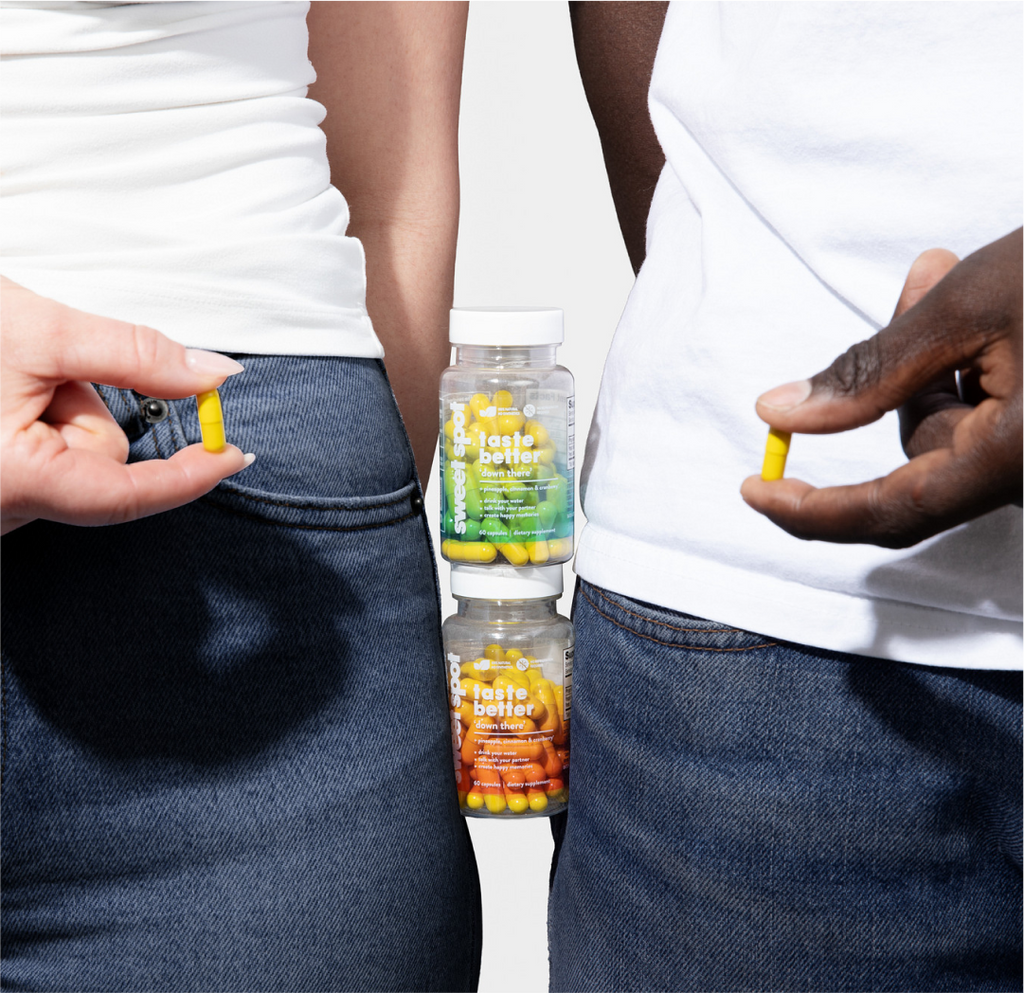
A freshness routine can be private, optional, and something you start only once health questions are settled. Sweet Spot For Her is a swallowed, probiotic-friendly dietary supplement featuring pineapple extract to support natural freshness, two a day with water. It won't standardize taste and it isn't a treatment. It's simply a small everyday habit, and plenty of people happily skip it.
Frequently Asked Questions
Does vaginal taste change after sex?
It can. Semen is less acidic than the vagina and has its own taste, so for a while after unprotected sex things may seem different. Lubricants and condoms can add their own flavor too, especially flavored or scented ones. A rinse of the outside with water is plenty. If a fishy smell appears and lingers for days, get it checked.
Can I make myself taste like what I've seen online?
Please don't try. Online scenes are edited, scripted, and not a standard of anything. Chasing a fictional flavor usually means scented washes or internal products, which are the things most likely to cause irritation. If something about your own taste or smell has genuinely changed, that's worth a clinician visit, not a performance.
Is it rude to tell a partner they taste different?
Not if it's said kindly and without a fix attached. Timing helps: a quiet moment later lands better than a comment mid-intimacy. Lead with how you feel about them, mention the change as an observation, and leave it there. If the change comes with discomfort for them, encourage a checkup rather than a product.
Does a freshness capsule decide how I taste?
No. A capsule like Sweet Spot For Her is designed as an everyday freshness routine, not a flavor drug, and the product page makes no tasting promise. Your ordinary range stays your ordinary range whether you take it or not. Think of it as one small habit, never as an audition.
When should taste talk stop and a doctor visit start?
Switch from flavor to a clinic if the smell becomes strongly fishy, if discharge changes, or if you notice itching, burning, pelvic pain, fever, unexpected bleeding, or pain when you pee. Partners don't get to grade anyone through those symptoms. During pregnancy, the threshold for calling is even lower.
YOUR NEXT STEP, ON YOUR TERMS
Keep it simple.
Find your routine.
Explore daily supplements and external-care essentials. Our products are not treatments for medical conditions; speak with a qualified clinician about symptoms or health concerns.
Or explore other products: