Female Health
Probiotics for Candida: What the Research Shows and Its Limits

Pineapple-extract supplement. 60 capsules · 30-day supply.
Shop For Her →
Probiotics for candida are one of the most searched corners of the supplement world, and the honest answer is that the research is mixed. Candida is a yeast that normally lives on and in the body without causing trouble. Candidiasis, the actual infection, is a diagnosis a clinician makes in a specific place, like the mouth, skin or vagina. A probiotic capsule is not a treatment for it.
The Short Answer
Some small studies have looked at adding a probiotic alongside standard antifungal care, with uneven results. No capsule replaces a diagnosis or prescribed treatment, and an extreme diet is not required. If you have itching, mouth pain, white patches or a spreading rash, the most useful next step is getting it looked at.
What Is "Candida Overgrowth," Really?
Candida is a fungus that can share your body with you quietly for years. Marketing often reframes that ordinary fact as a permanent emergency called "overgrowth," then sells a funnel of quizzes, diets and pills to fix it.
Some people genuinely do have candidiasis, and they deserve proper care rather than a catch-all label. But the word "overgrowth" can't tell you whether your itch is yeast, your fatigue is a long week, or your sugar cravings are just cravings. With probiotics for candida, the narrower the claim, the more you can trust it. You're allowed to feel tired without taking on a fungus identity.
Where Does Candidiasis Actually Happen?
Clinicians describe candidiasis by location, and each site looks and feels different:
- Mouth (oral thrush): soreness and white patches on the tongue or cheeks.
- Vulva and vagina: itching, burning and thick discharge.
- Skin folds: a red, irritated rash in warm, moist areas.
- Deeper infection: rare, usually in people who are already very ill, and always a hospital matter rather than a supplement question.
Oral pain is not the same visit as vaginal itch. If your immune system is weakened, or you use a steroid inhaler and your mouth is sore, skip the supplement aisle and get seen. A capsule isn't a treatment at any of these sites, including the mild ones. If you're unsure whether your symptoms are yeast or something else, our guide to telling bacterial vaginosis apart from a yeast infection is a helpful starting point.
What Does the Research on Probiotics for Candida Show?
Trials that pair a probiotic with standard antifungal care make up a mixed shelf. Some are small. Some show a modest change in how often symptoms return. Others show no difference you would notice. They also use different products, so a promising paper isn't a universal key that unlocks every bottle on the shelf.
Some of these studies are run under clinician guidance, which means their methods aren't home instructions. We won't name the strains those papers used or turn them into a shopping list, because copying a methods section is not the same as being cared for. "Mixed" is the honest summary, and a confident caption doesn't add data. For a closer look at the related research on vaginal yeast specifically, see what the research says about probiotics for thrush, and for the classic supplement in this space, what people mean by acidophilus for yeast.
Do You Need a Candida Diet?
Cutting every food you enjoy because a post blamed sugar for a fungus isn't a plan. Extreme elimination diets can leave you hungry and irritable while bringing you no closer to a diagnosis.
If a clinician gives you food advice for a condition they've actually named, follow theirs. Random elimination charts from the internet are a different thing. You can keep eating regular meals while you wait for an appointment, and you can skip cleanses entirely. A cleanse is not a treatment and not a reset. If you want the nuance on the sugar question, our short reading on sugar and yeast covers what is and isn't known.
Candida Claims Worth Questioning
- Overgrowth quizzes. An online quiz is not an exam. Fatigue plus a sweet tooth is not a diagnosis. Take itching, mouth pain or a rash to a clinician instead.
- One fungus, one fix. The mouth, vagina and skin are different places. A single capsule story that claims to cover all three is too tidy to trust.
- Diet panic. A blog that uses candida as a reason to ban food groups isn't giving medical advice. Ordinary meals are fine unless a clinician tells you otherwise.
- Study shortcuts. A paper about a clinician-guided product isn't a home protocol. Don't copy strains, routes or schedules from a methods section.
Should Probiotics Replace Antifungal Treatment?
No. When a clinician prescribes antifungal care, that prescription is the plan. Probiotic research beside that care is mixed and doesn't substitute for it, so don't delay medicine you've been told to take while you wait to feel convinced by a supplement.
Food is still food. Yogurt can be a perfectly good breakfast, but it isn't a vaginal treatment and it doesn't belong inside the vagina. Our article on where yogurt for vaginal health actually belongs explains why. Pair this topic with regular meals, decent sleep and a visit if something itches, hurts or looks like thrush, not with a juice day or a stranger's banned-foods list.
When to See a Doctor
Book a visit if you notice any of the following:
- Mouth pain, white patches or plaques on the tongue
- Vaginal itching or burning, or thick, unusual discharge
- A rash that spreads
- Fever, pelvic pain, bleeding or pain when you pee
Go sooner if you're immunocompromised, pregnant, or using a steroid inhaler and develop new mouth soreness. Let your clinician know about any extreme diets you've already tried. During pregnancy, don't start a new supplement unless your obstetric clinician agrees. This article is general information, not medical advice.
Where a Freshness Supplement Fits
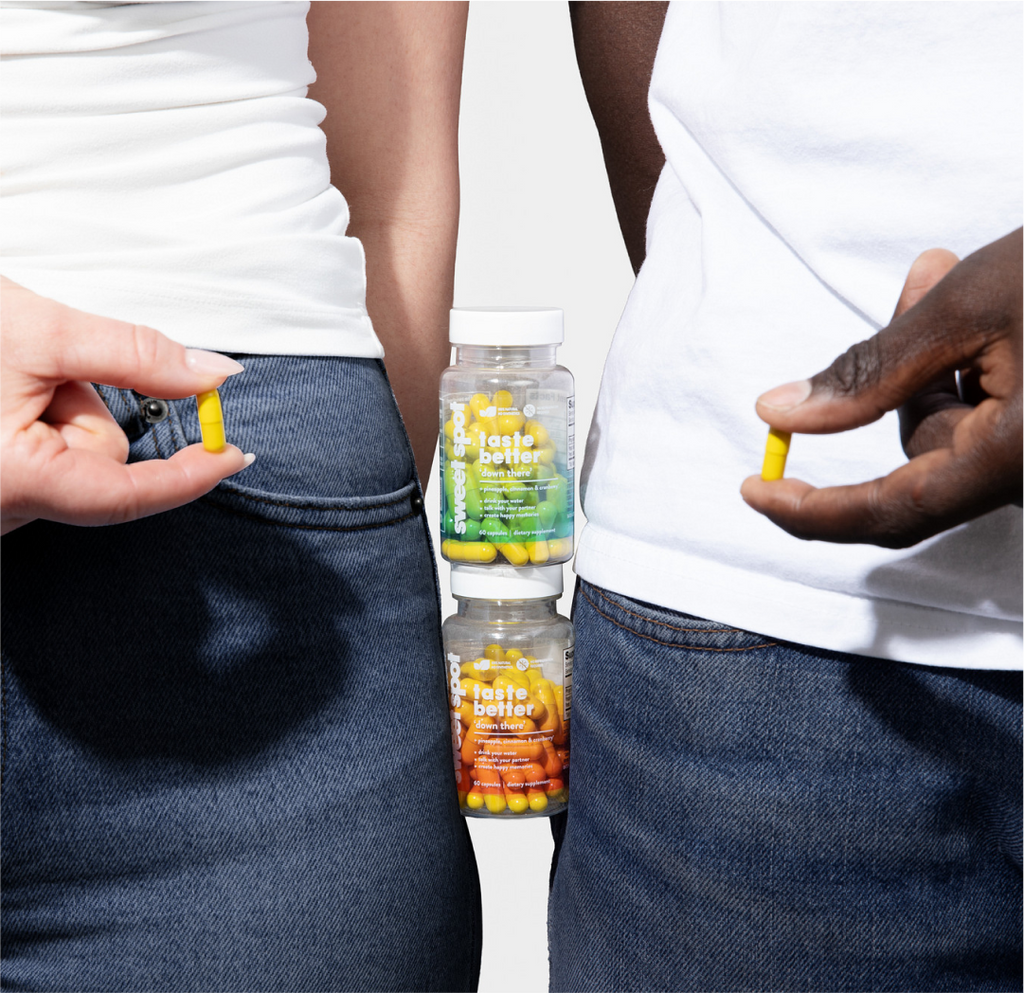
If you'd like an everyday intimate wellness habit once any real symptoms have been checked, Women's Sweet Spot is a probiotic-friendly dietary supplement featuring pineapple extract, taken as two capsules daily with water, for natural freshness. It isn't an anti-candida program and doesn't treat yeast or thrush. Think of it as an optional part of a routine, not a fungus battle. You can also browse the full collection.
Frequently Asked Questions
What should I tell my clinician if I think it's candida?
Be specific about place and timing. Say where it hurts or itches, when it started, and what the discharge or patches look like. Mention recent antibiotics, a steroid inhaler, diabetes, pregnancy, and anything you've already tried, including diets, creams or capsules. Those details help far more than the word "overgrowth," and they make a short appointment count.
Can I take a probiotic while I'm on an antifungal?
Ask the person who prescribed the antifungal. Some clinicians are comfortable with it, and the research on pairing the two is mixed rather than alarming. What matters is that the prescribed treatment stays the plan. Don't stop it early because a capsule feels gentler, and if symptoms come back after you finish, call instead of reusing leftovers.
Does sugar feed candida?
The internet version, where one cookie feeds a fungal army, is a big stretch. Blood sugar can matter for some people, especially those with diabetes, so that's a fair question to raise with your own clinician. For everyone else, an extreme sugar ban mostly makes you hungry and cranky without bringing you any closer to a diagnosis.
Why do some people get yeast infections again and again?
Repeat infections have a lot of possible explanations, and some of them aren't yeast at all. That's exactly why recurring symptoms deserve a proper workup, sometimes with a swab or culture, instead of another round of guessing. If you've had several episodes in a year, say so plainly at the appointment, because it changes how your clinician approaches it.
Does Women's Sweet Spot fight candida?
No, and it isn't designed to. It's two capsules a day with water, featuring pineapple extract in a probiotic-friendly dietary supplement, meant as a freshness habit. If you're shopping because of itching or a white coating in your mouth, put the cart down and book the visit first. The capsule can wait.
YOUR NEXT STEP, ON YOUR TERMS
Keep it simple.
Find your routine.
Explore daily supplements and external-care essentials. Our products are not treatments for medical conditions; speak with a qualified clinician about symptoms or health concerns.
Or explore other products: