Get 20% off your order with code FRESH — or subscribe and save for monthly deliveries!

Questions, answered

Questions, answered

Semen Taste, Vaginal Odour and pH: 62 Questions Answered

Semen is alkaline — pH 7.2 to 8.0 — and that alkalinity is why it tastes bitter. Vaginal fluid is the opposite: acidic, at pH 3.8 to 4.5, and that acidity is what keeps odour away. Almost every question on this page comes back to those two numbers, and to the fact that advice written for one does not transfer to the other.

After chemistry, the largest factor is water. Hydration does more for how you taste than any single food or supplement, and it shows fastest — within 24 to 48 hours. Diet comes next: pineapple, citrus, melon and berries on one side; garlic, asparagus, red meat, coffee and alcohol on the other. Changes show in days, not months. The two-to-three-month figure repeated across this topic belongs to sperm production and has nothing to do with taste, which comes from seminal fluid that turns over in days.

Covered below: why semen tastes bitter, sour or salty · how long pineapple and bromelain take to work · the foods that make you taste sweeter, and the ones that make it worse · vaginal taste, odour and pH balance · what the research does and does not show about probiotics for BV, yeast infections and vaginal health · and what a taste supplement cannot do.

Four things worth knowing first

  • Semen is alkaline

    pH 7.2–8.0. That alkalinity is why it reads as bitter, and it is structural — diet reduces bitterness, nothing removes it.
  • The vagina is acidic

    pH 3.8–4.5, and that acidity is the defence. Tangy is the healthy state, which is why advice written for semen does not transfer.
  • Days, not months

    Taste comes from seminal fluid, which turns over in days. The 74-day figure quoted everywhere belongs to fertility, not taste.
  • Water beats everything

    Hydration is the largest factor anyone controls and the fastest to show, at 24–48 hours. No supplement outperforms it.

Semen taste — what it is and why

The largest group of questions people bring here, and the one where the chemistry actually explains the answers.

What does semen taste like?

Most people describe semen as salty and slightly bitter, sometimes metallic, occasionally faintly sweet. The dominant note comes from its alkaline pH of 7.2 to 8.0. Zinc from prostate fluid adds the metallic edge, and a small amount of fructose supplies whatever sweetness is there.

NoteWhere it comes from
SaltySodium and potassium in seminal fluid
BitterAlkaline pH, plus bitter amino acids from protein breakdown
Metallic or sharpZinc, concentrated in prostate secretion
Faintly sweetFructose from the seminal vesicles, 1–4 mg/mL
Bleach-likeThe most common lay descriptor for the smell — also alkalinity

Semen is not one fluid. The prostate contributes an acidic secretion, the seminal vesicles an alkaline one, and the alkaline share wins — which is why the overall taste sits where it does. That split is also why the flavour varies so much between people and between days.

The range of normal is wide. Strong bitterness, a sour edge, or a noticeably metallic taste are all within it.

Read more: What semen actually tastes like

Why does semen taste bitter?

Semen tastes bitter mainly because it is alkaline, with a pH of 7.2 to 8.0. The human tongue reads alkalinity as bitter. Protein in semen also breaks down into bitter-tasting amino acids, and dehydration concentrates both effects. Diet changes the intensity, not the underlying chemistry.

Two mechanisms, not one. Most pages give only the first:

  • pH. Alkaline fluids taste bitter. Semen sits at 7.2–8.0 and clinical samples often measure higher.
  • Protein breakdown. Semen carries significant protein, and its breakdown products include bitter amino acids. This is a separate cause from pH and is the one most articles miss.

Everything that makes bitterness worse works through concentration or through what gets added to the mix — dehydration, caffeine, alcohol, heavy red meat, garlic and other sulphur-heavy foods, and smoking.

The honest part: bitterness is structural. Diet and hydration reduce it. Nothing removes it, because the alkalinity that causes it is not optional.

Read more: Why semen tastes bitter — the full guide

Why does semen taste sour or acidic?

A sour or acidic taste usually means the prostate's acidic secretion is more prominent in that sample, or that recent diet has shifted things — citrus, vinegar, fermented foods and alcohol all contribute. A sour taste is common and, on its own, not a warning sign.

Semen mixes an acidic prostatic secretion with an alkaline seminal-vesicle fluid. The proportions vary between ejaculations, particularly with frequency and time since the last one, so the same person can taste alkaline-bitter one day and sour the next.

What makes a sour taste worth attention is company. Sour plus pain, burning, discharge, or a genuinely foul smell is a reason to see a doctor. Sour on its own, in a healthy person, is variation.

Read more: The causes of bitter and sour semen

Why does semen taste worse on a low-carb or sugar-free diet?

Cutting carbohydrates and sugar removes the fructose and fruit acids that supply what little sweetness semen has, while low-carb diets usually raise meat and dairy intake. Less counterweight, more of the compounds that push bitterness up. The change is real and commonly reported.

This is one of the most searched questions on the topic and almost nobody answers it directly. The mechanism is straightforward once the composition is clear: fructose is a normal constituent of seminal fluid at 1–4 mg/mL, and dietary sugars are not its only source but they are part of the picture. Remove them and the faint sweet note that offsets alkalinity weakens.

Keto and carnivore diets compound it. Both raise red meat, both raise protein load, and protein breakdown is the second bitterness mechanism.

What helps without abandoning the diet:

  • Water first. Dehydration is common on low-carb diets because glycogen holds water, and losing it concentrates everything.
  • Low-sugar fruit — berries, kiwi — keeps some fruit acid in the diet at a small carbohydrate cost.
  • Cut the additive stressors that are free to cut: coffee volume, alcohol, garlic on the day.

Read more: What makes bitterness worse

Is semen supposed to taste salty?

Yes. Salt is one of the two most commonly reported notes, alongside bitterness. Seminal fluid contains sodium, potassium and calcium, and it is isotonic enough to read as distinctly salty. A salty taste is normal and is not a sign of anything.

Saltiness tends to be more noticeable when someone is dehydrated, for the same reason everything else is — less water, same solutes, stronger concentration. It is the note least changed by diet.

Does dehydration make semen taste worse?

Yes, and it is the single largest factor a person controls. Dehydration concentrates every dissolved compound in seminal fluid at once, so salt, bitterness and smell all intensify together. Rehydrating is also the fastest change available, showing up within 24 to 48 hours.

ChangeTime to notice
Increased water intake24–48 hours
Adding or removing foods3–7 days
Stable, settled change2–4 weeks
As good as diet will get it4–6 weeks

Nothing else on the list moves that fast, which is why hydration is the honest first answer to "what do I do before tonight".

Read more: The full timeline

Does everyone taste different?

Yes, substantially. Baseline chemistry, diet, hydration, medication, smoking, alcohol and how recently someone last ejaculated all shift the result. Two people eating identically will not taste the same, and one person will not taste the same on two different days.

This matters for expectations more than for tactics. The realistic goal is moving your own baseline in a better direction, not reaching some shared standard that does not exist.

Is bitter semen a sign something is wrong?

Usually not. Bitterness is the normal consequence of alkaline pH and is present to some degree in everyone. What warrants a doctor is a sudden change with other symptoms: pain, burning, blood, an unusually foul smell, or discharge. Taste alone is rarely a medical signal.

The pattern to watch is change plus company. A taste that has always been bitter is chemistry. A taste that changed sharply in a week, alongside anything painful, is worth a consultation — not because of the taste, but because of what accompanies it.

Does smoking or drinking change how semen tastes?

Both make it worse, and both are among the more reliable effects reported. Alcohol dehydrates and its metabolites reach seminal fluid. Smoking introduces its own compounds and is frequently described as producing a sharper, more chemical note. Reducing either is noticeable within days.

Of the two, alcohol acts faster because dehydration is immediate. Smoking is the slower, more persistent one — people who stop generally report a change over weeks rather than days.

Read more: Smoking, alcohol and how you taste

Does coffee affect semen taste?

Coffee has a mild negative effect through two routes: caffeine is a diuretic, so it works against hydration, and caffeine metabolites are among the compounds reported to sharpen bitterness. One cup is unlikely to matter. Five, with no water alongside, will.

The practical version is not "stop drinking coffee". It is to match intake with water and to leave a gap before intimacy rather than drinking an espresso on the way.

Does red meat make you taste worse?

Red meat is consistently reported as one of the foods that pushes taste in the wrong direction. The proposed reason is protein load — protein breakdown yields bitter amino acids — and red meat delivers more of it than most foods per serving. Effect size varies by person.

Worth keeping in proportion. Removing a daily steak habit does more than any single food added on top, which is the general shape of this topic: removal outperforms addition.

Read more: Foods that help and foods that hurt

How long it takes

Where nearly every other page on this topic is wrong, because it borrows a number from fertility research that does not apply to taste.

How long does it take for diet to change semen taste?

Hydration shows within 24 to 48 hours. Adding or removing foods shows in 3 to 7 days. A stable change takes 2 to 4 weeks, and 4 to 6 weeks is about as far as diet takes it. Anyone quoting two to three months has confused taste with fertility.

The 74-day figure does not apply here, and most pages on this topic get it wrong. Sperm cells take roughly 74 days to mature, which is why fertility advice says to allow two to three months. But sperm cells are a small fraction of ejaculate volume and contribute almost nothing to flavour.

Taste comes from seminal fluid — the prostate and seminal-vesicle secretions that make up more than 90% of the volume. That fluid turns over in days, not months. Two different systems, two different clocks:

What you are changingTurnoverRelevant to
Seminal fluid — prostate and vesiclesDaysTaste and smell
Sperm cells~74 daysFertility, count, motility

So the timeline below is short because the biology is short.

Read more: The timeline in full

How long does pineapple take to work?

People who report an effect from pineapple generally describe it appearing within 12 to 24 hours and settling over 2 to 3 days of eating it consistently. A single serving an hour before is unlikely to do much. No trial has ever measured this, so the numbers come from reports, not data.

The distinction matters more than the number. There is no clinical study of pineapple and semen taste — not a weak one, not a small one, none. What exists is a plausible mechanism and a very large volume of consistent anecdote.

What is reasonable to expect, stated as what it is:

ApproachCommonly reported
One glass an hour beforeLittle to nothing
A serving daily for 2–3 daysWhere most reports start
Daily for 1–2 weeks alongside waterThe strongest reports

Hydration is doing some of that work and is impossible to separate out, because pineapple juice is mostly water.

Read more: Pineapple: the real timeline

How many days does it take to improve semen taste?

Three to seven days of consistent change is where most people first notice something. Two to four weeks is where it stabilises. If nothing has changed after four to six weeks of genuinely consistent hydration and diet, diet is not the lever for you.

Consistency is the whole variable. The failure mode is not that diet does not work — it is three good days followed by a night of drinking, which resets the fastest-moving factor entirely.

Do the results last, or do you have to keep it up?

They last as long as the habit does. Seminal fluid is continuously produced from what is in the body at the time, so its composition tracks current diet and hydration rather than accumulating. Stop, and it drifts back over a similar timescale to the one it took to change.

That is the same fast turnover that makes the improvement quick working in the other direction. It is not a course to complete.

Is there anything that works the same day?

Water, and not much else. Drinking properly through the day is the only change with a real chance of showing by evening, because dehydration is the one factor that concentrates everything at once. Everything else needs days.

A pineapple juice an hour before is not likely to change the chemistry. It is also not nothing — it is fluid, and it is a signal to a partner that you thought about it.

If tonight matters, the short list is water through the day, skip the garlic and the fourth coffee, keep alcohol modest, and shower.

  1. Water steadily from morning — not a litre at 6pm.
  2. No garlic, onion, asparagus or heavy red meat that day.
  3. Alcohol light or none — it dehydrates faster than you rehydrate.
  4. Shower. Surface freshness is a separate variable from taste and it is the one under total control.

Read more: Before your date

How long before results if you take a supplement?

The same clock applies, because a supplement works through the same seminal fluid. Expect the earliest reports around 3 to 7 days and a settled result at 2 to 4 weeks. A 60-capsule bottle is a 30-day supply, which is roughly one full cycle of that timeline.

Anyone promising an effect in hours is selling the promise, not the mechanism.

Read more: How to taste better

Foods, drinks and pineapple

What helps, what hurts, and what the evidence for any of it actually is.

What foods make you taste sweeter?

Fruit with high water and natural sugar content is the group with the most consistent reports: pineapple, mango, papaya, melon, oranges, grapes, berries and kiwi. Cinnamon, parsley, celery and peppermint appear repeatedly as well. Water underpins all of it.

FoodWhy it is on the list
PineappleHigh water, high sugar, and bromelain — the most reported single food
Mango, papayaSame profile as pineapple; papaya also carries a proteolytic enzyme
Melon, watermelonVery high water content — works largely through hydration
Oranges, grapefruitFruit acids and water; citrus is widely reported
Berries, kiwiThe low-sugar option — useful on a low-carb diet
CeleryHigh water, and long-standing anecdotal reputation
Parsley, mint, cinnamonAromatic; reported to help with smell more than taste
Grapes, applesWater and fruit sugar; unremarkable but consistent

What almost every list gets wrong is the ranking. Removal beats addition. Cutting garlic, heavy red meat, excess coffee and alcohol produces a larger change than adding any fruit on this list, because those foods actively push taste in the wrong direction while fruit only nudges it back.

Read more: The complete guide to foods that make you taste sweeter

What foods make you taste bitter?

Garlic, onions, asparagus, broccoli and cauliflower are the sulphur group. Red meat and heavy dairy add protein load. Coffee, alcohol and cigarettes work through dehydration and their own metabolites. Cutting these matters more than adding anything.

Food or habitMechanism
Garlic, onionSulphur compounds pass into bodily fluids
AsparagusSulphur compounds — the same reason it changes urine smell
Broccoli, cauliflower, cabbageCruciferous sulphur compounds
Red meatProtein load; breakdown yields bitter amino acids
Heavy dairyProtein and fat; widely reported as one of the worst
CoffeeDiuretic, plus caffeine metabolites
AlcoholDehydration, plus its own metabolites
CigarettesIntroduces a distinct sharp, chemical note

None of these need to leave the diet permanently. Timing does most of the work — the sulphur foods clear in roughly a day or two.

Read more: Diet and intimacy, in full

Does pineapple actually work?

There is no clinical trial showing pineapple changes semen taste. What exists is a plausible mechanism, bromelain breaking down proteins that carry bitter notes, and a large volume of consistent anecdote. Anyone telling you it is proven has not read the literature, because there is none to read.

This deserves a straight answer, because every page selling something on this topic implies evidence it does not have. Here is the actual state of it:

ClaimStatus
Pineapple changes semen tasteNo trial has tested it. Widely reported anecdotally
Bromelain breaks down proteinsTrue — bromelain is a well-characterised proteolytic enzyme
Therefore it reduces bitternessPlausible, unproven. The step from enzyme to taste is untested
Pineapple is high in water and sugarTrue, and confounds every anecdote — hydration alone would help

Our own position follows from that. Pineapple extract is what our supplements are built on, and the reason is the mechanism plus the reports, not a study we can point to. We would rather say that than imply a trial exists.

Read more: Pineapple and intimate taste

What does bromelain do?

Bromelain is a proteolytic enzyme found in pineapple, concentrated in the stem and core. It breaks peptide bonds in proteins. The theory behind its use here is that protein breakdown products carry bitter notes, so an enzyme acting on them could reduce bitterness. That step has never been tested.

Bromelain itself is not speculative — it is well characterised, used commercially as a meat tenderiser and studied for digestion and inflammation. What is speculative is the link between taking it and how someone tastes.

Two practical notes. The stem and core hold more bromelain than the sweet flesh most people eat, and heat denatures it, which is why tinned pineapple is a weaker bet than fresh.

Read more: How pineapple extract works

Does pineapple juice work as well as fresh pineapple?

Juice delivers the water and sugar but usually less bromelain, because most commercial juice is pasteurised and heat denatures the enzyme. Fresh pineapple, including the core, retains more. If the mechanism matters, fresh beats juice; if hydration is doing the work, either is fine.

Since nobody has separated hydration from bromelain in a controlled way, this is reasoning from the chemistry rather than from evidence. It is stated that way on purpose.

What drinks make you taste sweeter?

Water first, by a wide margin. After that: pineapple juice, orange juice, cranberry juice, and green tea for its water content. What matters more is what comes out — alcohol and heavy coffee undo more than any juice adds.

  • Water — the only one with a mechanism nobody argues about.
  • Pineapple juice — water, sugar, some bromelain if not pasteurised.
  • Citrus juice — fruit acids and water.
  • Cranberry juice — widely recommended, mostly for the same reasons.
  • Green tea — mild diuretic but net hydrating at normal intake.

Does watermelon make you taste better?

Watermelon is about 92% water, which makes it a genuinely useful food here even though nothing specific to watermelon has been demonstrated. Its effect is hydration by another name. That is not a small thing, since hydration is the largest controllable factor.

Does wheatgrass make semen taste better?

Wheatgrass appears on many lists and has no evidence behind it for this purpose. The usual reasoning is chlorophyll and alkalinity, neither of which connects to the mechanism in a way that holds up. It is not harmful, it is just not supported.

Included here because it is searched, and because the useful answer is that a food appearing on lists is not the same as a food that works.

What fruits make you taste good?

Pineapple, mango, papaya, melon, oranges, grapes, kiwi, apples and berries. The common factors are high water content and natural sugars; papaya and pineapple additionally contain proteolytic enzymes. Fresh outperforms tinned, and whole fruit outperforms juice for everything except convenience.

Read more: The fruit guide

What should I eat before oral sex?

The day before matters more than the hour before. Water through the day, fruit rather than a heavy meal, and avoid garlic, onion, asparagus and alcohol. An hour beforehand, nothing you eat will change your chemistry — but a shower will change everything on the surface.

  1. Yesterday and today: water, steadily. This is the only lever that moves fast.
  2. Today's food: fruit, light meals, no garlic or onion, no asparagus, go easy on red meat and dairy.
  3. Drinks: keep alcohol light. It dehydrates faster than you can drink water to compensate.
  4. An hour before: shower. Plain warm water externally is enough and is better than anything scented.

Read more: Before your date — the full checklist

Do I have to change my whole diet?

No. The change with the largest effect is drinking more water, and the second largest is removing two or three specific foods on the days it matters. Nobody needs to become vegetarian over this. Consistency on a few things beats an overhaul that lasts a week.

The people who see the least result are usually the ones who changed everything for four days and then stopped.

Vaginal taste, odour and pH

Chemically the opposite problem to the one above — acidic rather than alkaline, and advice written for one does not transfer.

What does a healthy vagina taste like?

Slightly tangy, sour or metallic. That acidity is the point — normal vaginal pH is 3.8 to 4.5, and it is the acidity itself that keeps harmful bacteria from establishing. A vagina is not supposed to taste sweet or neutral, and tasting mildly sour is a sign the system is working.

This is the near-opposite of semen, which is alkaline at 7.2 to 8.0. The two halves of this topic are chemically at different ends of the scale, which is why advice written for one does not transfer to the other.

FluidpHReads as
Vaginal3.8 – 4.5 (acidic)Tangy, sour, sometimes metallic
Semen7.2 – 8.0 (alkaline)Salty, bitter, sometimes bleach-like

Taste and smell also shift across the menstrual cycle, after sex, after exercise and with hydration. Variation is normal. A sudden change is the thing worth noticing.

Read more: Vaginal taste and smell

How can I make my vagina taste better?

Water, first and by a distance. After that: fruit in the diet, cotton underwear, changing out of gym clothes promptly, and washing the vulva with plain warm water. Do not douche and do not use scented products internally — both raise pH and make odour worse.

  • Hydration. Same mechanism as everywhere else on this page — dilution.
  • Diet. Fruit, and less garlic, onion, asparagus, alcohol and coffee. Effects are milder here than for semen but real.
  • External washing only. Plain warm water on the vulva. The vagina cleans itself and does not need help.
  • Breathable underwear, changed after the gym. Trapped moisture and heat drive odour more than diet does.
  • No douching, no scented washes, no sprays. See below.

Read more: How to taste better

Do douches, washes or sprays help?

No — they make it worse, and this is one of the few points in this topic with clear medical consensus behind it. ACOG advises against douching. It raises vaginal pH and is associated with higher rates of bacterial vaginosis, pelvic inflammatory disease and adverse reproductive outcomes.

The logic is direct. The vagina's defence is its acidity, at pH 3.8 to 4.5. Douching flushes out the acid-producing bacteria that maintain it and raises the pH, which is exactly the condition in which the organisms causing odour do better. The practice creates the problem it is marketed to fix.

Sprays and deodorants sit in the same category — ACOG does not recommend them and notes they may worsen matters. Perfumed products applied to irritated skin also cause contact irritation on their own.

What to do instead: plain warm water on the vulva, external only. That is the whole protocol.

What causes vaginal odour?

Some odour is normal. A strong fishy smell most often points to bacterial vaginosis or trichomoniasis, both of which raise vaginal pH. Sweat, trapped moisture, a forgotten tampon, menstruation and semen left in place after sex all change smell temporarily and harmlessly.

SmellMost likely causeAction
Mild, musky, familiarNormalNone
MetallicBlood — period or after sexNone
Stronger after the gymSweat and trapped moistureChange and shower
Bleach-like or alkaline after sexSemen, pH 7.2–8.0, still presentPasses
FishyBacterial vaginosis or trichomoniasisSee a doctor
Foul, with pain, itching or unusual dischargeInfectionSee a doctor

Normal discharge is clear to white and does not have a noticeable odour. The fishy smell is the one that reliably means something, and it means something treatable — it is not a hygiene failure and it does not respond to washing harder.

Read more: Vaginal odour — causes and fixes

What is vaginal pH and why does it matter?

Vaginal pH is a measure of acidity, normally 3.8 to 4.5. Lactic-acid-producing bacteria maintain it, and that acidity suppresses the organisms that cause odour and infection. When pH rises, those organisms do better. Most odour problems are a pH story.

Several things raise it: menstruation, semen after unprotected sex, douching, antibiotics that reduce the resident bacteria, and hormonal changes including menopause. Most of those are temporary and self-correct.

Which is worth stating plainly, because "pH balance" is sold heavily and the normal range is rarely printed on the packaging. A number is easier to reason about than a promise.

Read more: pH and intimate health

How do I change my pH so I taste sweeter?

You mostly should not try. Vaginal pH is supposed to be acidic at 3.8 to 4.5, and that acidity is protective — deliberately raising it toward "sweet" would remove the defence that keeps odour away. What helps is supporting the existing balance, not moving it.

This question is searched often and is worth answering carefully, because the premise is inverted. Tangy is the healthy state. The goal people actually have — smelling and tasting fresher, feeling confident — is reached by keeping pH where it belongs, not by shifting it.

What supports it:

  • Water, and enough of it to matter.
  • Leaving the vagina alone. No douching, no internal washes.
  • Cotton underwear; changing out of damp clothing.
  • Treating infections properly when they occur, rather than masking the smell.

Read more: What pH balance actually means

Can food change how a woman tastes?

Yes, though less dramatically than for semen. The same foods apply — fruit and water help, garlic, onion, asparagus, alcohol and coffee push the other way. Vaginal fluid is produced in smaller volume and changes more slowly, so the effect is real but subtler.

Hydration remains the largest single factor for the same reason it is everywhere else: it dilutes.

Does your period change how you taste?

Yes. Blood is alkaline relative to normal vaginal fluid, so pH rises during and just after menstruation, and taste turns more metallic. Discharge, moisture and smell also shift across the cycle with hormone levels. All of it is normal and all of it resolves.

Does the gym or sweating make it worse?

Temporarily, yes — but through the skin, not the vagina. Sweat, heat and damp synthetic fabric create the conditions for odour on the vulva and groin. Changing out of gym clothes promptly and showering resolves it. This is a laundry problem more than a body problem.

Sitting in damp leggings for two hours after training does more for odour than a week of diet does.

Read more: The gym, sweat and staying fresh

Does discharge affect taste?

Normal discharge is clear to white, has no noticeable odour, and carries the mild acidity of healthy vaginal fluid. Its volume changes across the cycle and that changes intensity rather than character. Discharge that is grey, green, frothy or foul-smelling is a different matter and needs a doctor.

Probiotics, vitamins and pH pills

A category sold hard and explained badly. Here is what the research says, including where it says nothing.

What are probiotics for vaginal health?

They are supplements containing live bacteria, usually Lactobacillus species, taken to support the acid-producing bacteria that keep vaginal pH between 3.8 and 4.5. The evidence for them is strain-specific and dose-specific, which is the detail most product pages leave out.

That last point is the one worth understanding before buying anything in this category. The research does not show that "probiotics" work. It shows that particular strains at particular doses have produced particular results, and that most products do not match those specifications.

StrainDose studiedWhat was measured
L. rhamnosus TOM 22.810×10⁹ CFU/day, 10 daysBest-performing in a 2025 systematic review — improved Nugent score, pH and recurrence
L. rhamnosus GR-1, L. reuteri RC-14VariesThe most studied pairing; some support as adjuvant therapy
L. crispatus, L. plantarum, L. acidophilus1×10⁸ – 5.4×10⁹ CFU/day, 6 days to 4 monthsTherapeutic potential reported

How to read a label, then. A product that names its strain to the sub-species level and states CFU per dose can be checked against that table. A product that says only "probiotic blend" cannot be checked against anything.

Where we stand, so there is no confusion: our own supplements are pineapple-extract products for taste and freshness. They are not in this category, they carry no live cultures, and they are not an alternative to anything described above. If what you need is in the table, buy something in the table.

Read more: Probiotics and intimate health

Do probiotics help with yeast infections?

The evidence is weak. A Cochrane review found low and very low quality evidence that Lactobacillus probiotics used alongside antifungal treatment did not change the clinical cure rate. Some individual strains have limited support. Antifungal treatment remains the treatment.

The named strains with some support as adjuvant therapy are L. reuteri RC-14, L. rhamnosus GR-1 and L. rhamnosus Lcr35. "Adjuvant" is doing real work in that sentence — it means alongside the actual treatment, not instead of it.

A yeast infection is treatable and diagnosable. Itching, thick white discharge and soreness are worth ten minutes with a pharmacist or doctor rather than four weeks of supplements bought on a search result.

Nothing sold for taste or freshness treats a yeast infection, ours included. That is not modesty — it is what the products are.

Read more: Yeast infections explained

Do probiotics help with BV?

The Cochrane review on bacterial vaginosis found no conclusive evidence that probiotics are better than antibiotics or improve them, and insufficient evidence to recommend taking them before, during or after antibiotic treatment. Newer strain-specific research is more promising but does not change the first-line answer.

BV is the most common cause of a fishy vaginal odour and it is treated with antibiotics. Recurrence is common, which is exactly why the probiotic question keeps being asked — and why the strain-specific research on recurrence prevention is the interesting part of this literature rather than the treatment research.

The 2025 systematic review found L. rhamnosus TOM 22.8 at 10×10⁹ CFU/day for 10 days improved Nugent scores, vaginal pH and recurrence rate. That is a specific claim about a specific organism at a specific dose, and it is the standard any product in this category should be held to.

If you have a fishy odour, see a doctor. It is a short appointment and a short course of treatment, and no supplement shortens that path.

Read more: Bacterial vaginosis and odour

What vitamins matter for vaginal health?

There is no vitamin with strong evidence for changing vaginal taste or odour. Vitamin D, vitamin C, zinc and folate all have general roles in immune function and tissue health, and deficiency in any of them is worth correcting — but correcting a deficiency is different from taking a supplement for an effect.

The honest version of this answer is that "vitamins for vaginal health" is a marketing category more than a clinical one. Where a specific deficiency exists, treating it helps everything. Where it does not, adding vitamins on top does very little.

The things with better evidence behind them for odour and comfort are unglamorous: hydration, not douching, breathable underwear, and treating infections properly when they happen.

Read more: Supplements for vaginal health

Do pH balance pills work?

There is little evidence that an oral pill meaningfully shifts vaginal pH. Normal pH is 3.8 to 4.5 and is maintained locally by acid-producing bacteria. Products in this category rarely state that range on the label, which is itself informative.

Two things are being sold under one name. Some "pH balance" products are probiotics, in which case the strain-and-dose question above applies. Others are cranberry, vitamin C or blends with no proposed mechanism for reaching the vagina at all.

A fair test before buying anything in this category:

  1. Does the label name a strain to sub-species level, or just say "probiotic"?
  2. Does it state CFU per serving, and does that number appear anywhere in the research?
  3. Does it state the normal pH range it claims to restore?
  4. Does it distinguish between supporting normal pH and treating an infection?

Most fail the first two.

Read more: pH balance, honestly

Do probiotics help with vaginal odour?

Only indirectly, and only if the odour comes from bacterial vaginosis. Odour caused by BV is a pH and bacteria problem, which is the mechanism probiotics are proposed to address. Odour from sweat, trapped moisture or a retained tampon has nothing to do with gut or vaginal flora.

Which makes the first question diagnostic rather than commercial: what kind of smell is it? A fishy odour points to BV and to a doctor. A stronger-than-usual musky smell after the gym points to a shower.

What about probiotics for the urinary tract?

This is a separate literature from the vaginal one and it is also strain-specific. Lactobacillus strains have been studied for recurrent UTI prevention with mixed results. Nothing in it treats an active urinary tract infection, which needs antibiotics and a diagnosis.

Burning on urination, urgency, and cloudy or bloody urine are reasons to be seen the same week, not to start a supplement.

What is the difference between a probiotic and a taste supplement?

A probiotic delivers live bacteria at a stated dose to influence the microbiome. A taste supplement delivers plant compounds — in our case pineapple extract — aimed at how bodily fluids taste and smell. Different ingredients, different mechanisms, different purposes, and they do not substitute for one another.

Probiotic supplementsTaste supplements including ours
What is in itLive bacterial cultures, named strainsPlant extracts — pineapple, cranberry, cinnamon
Stated asCFU per servingMilligrams of extract
Aimed atMicrobiome and pH supportTaste and freshness
Evidence baseStrain-specific, reviewed by Cochrane and othersMechanism plus anecdote; no trials on taste
Treats infectionNoNo

We are specific about this because the two get sold interchangeably and the confusion costs people money. Our products carry no live cultures and no CFU count. What they are is a pineapple-extract supplement for taste and freshness, and that is the only thing this site calls them.

Read more: What taste supplements can and cannot do

Should I see a doctor instead of taking a supplement?

If you have symptoms, yes. Itching, burning, pain, unusual discharge, a fishy smell, bleeding between periods or pain during sex all need a diagnosis, and most have short, effective treatments. Supplements are for when nothing is wrong and you want to feel better about it.

The reason this page keeps returning to that line is that the search results for these questions are dominated by people selling capsules, and the queries behind them are often symptoms. A four-week supplement trial is an expensive way to delay a two-day course of treatment.

The supplements and wipes

What is Taste the Sweet Spot?

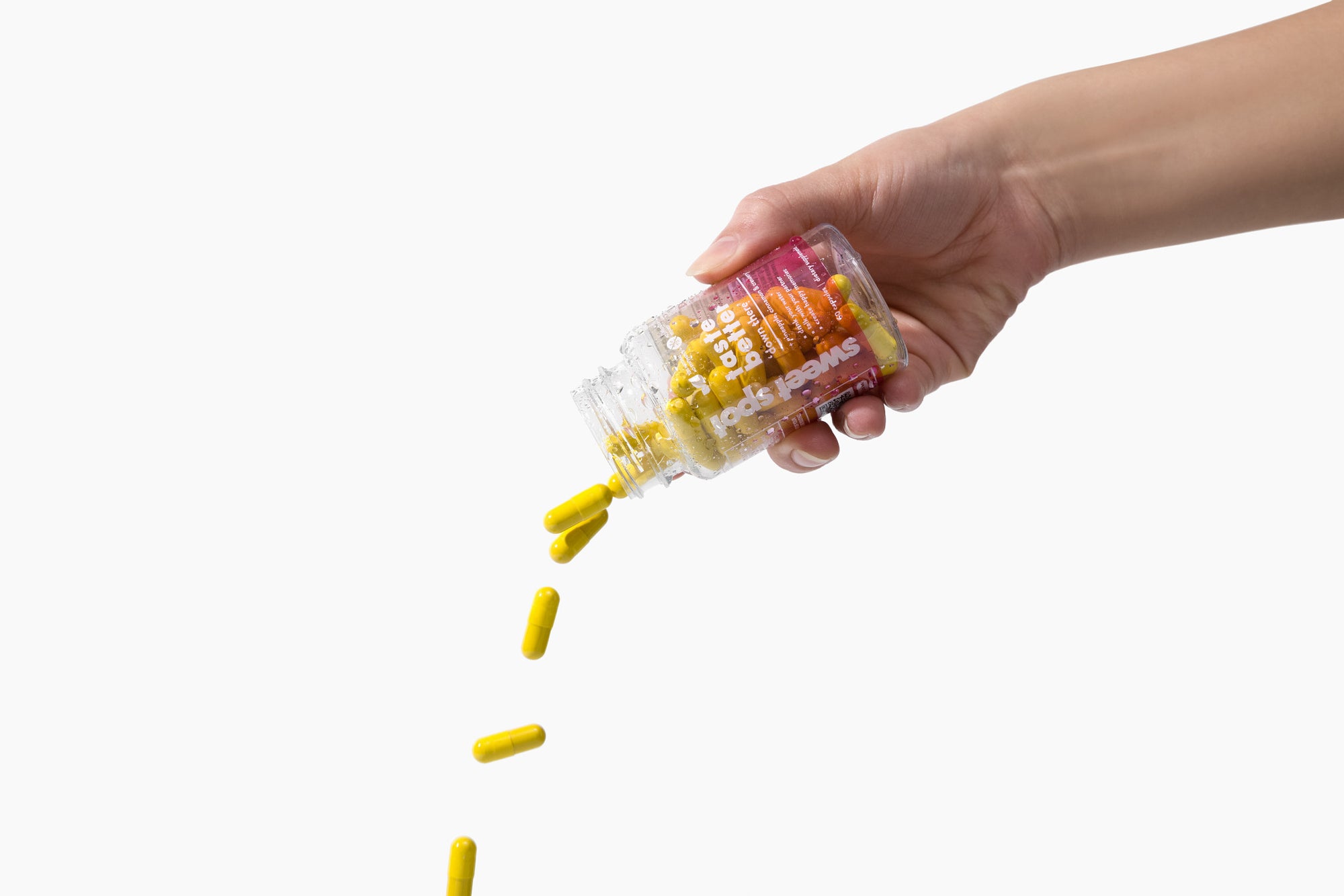
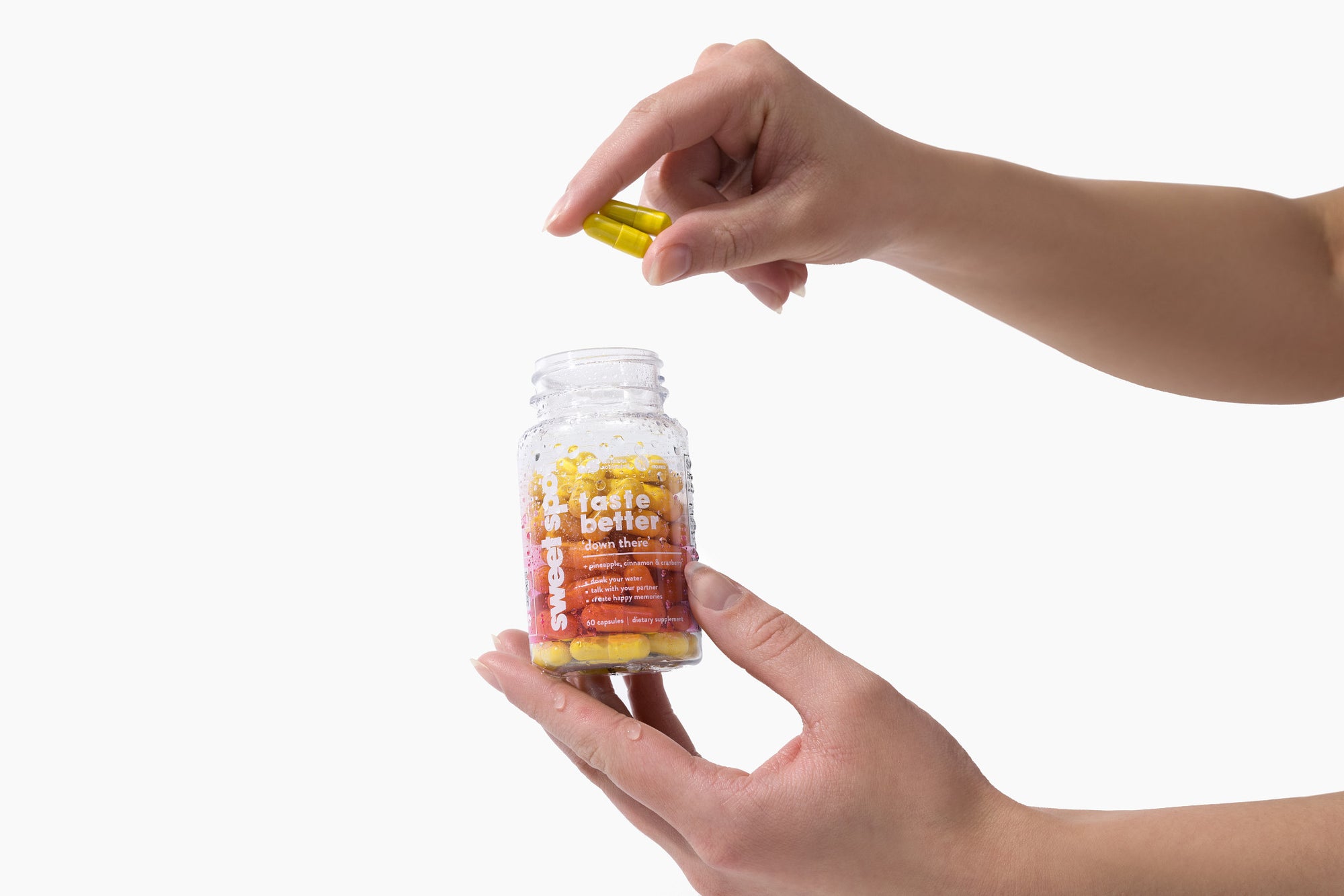
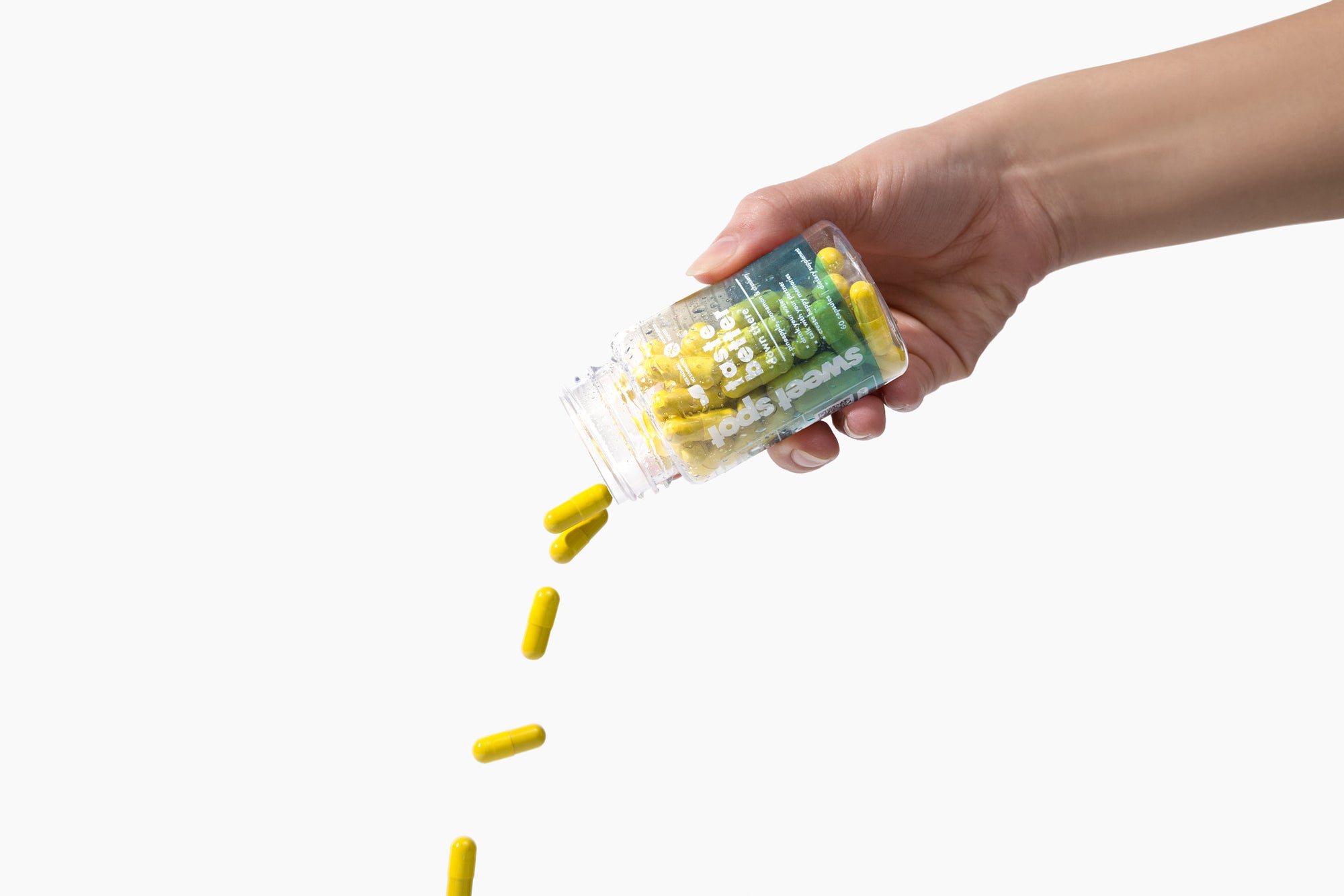
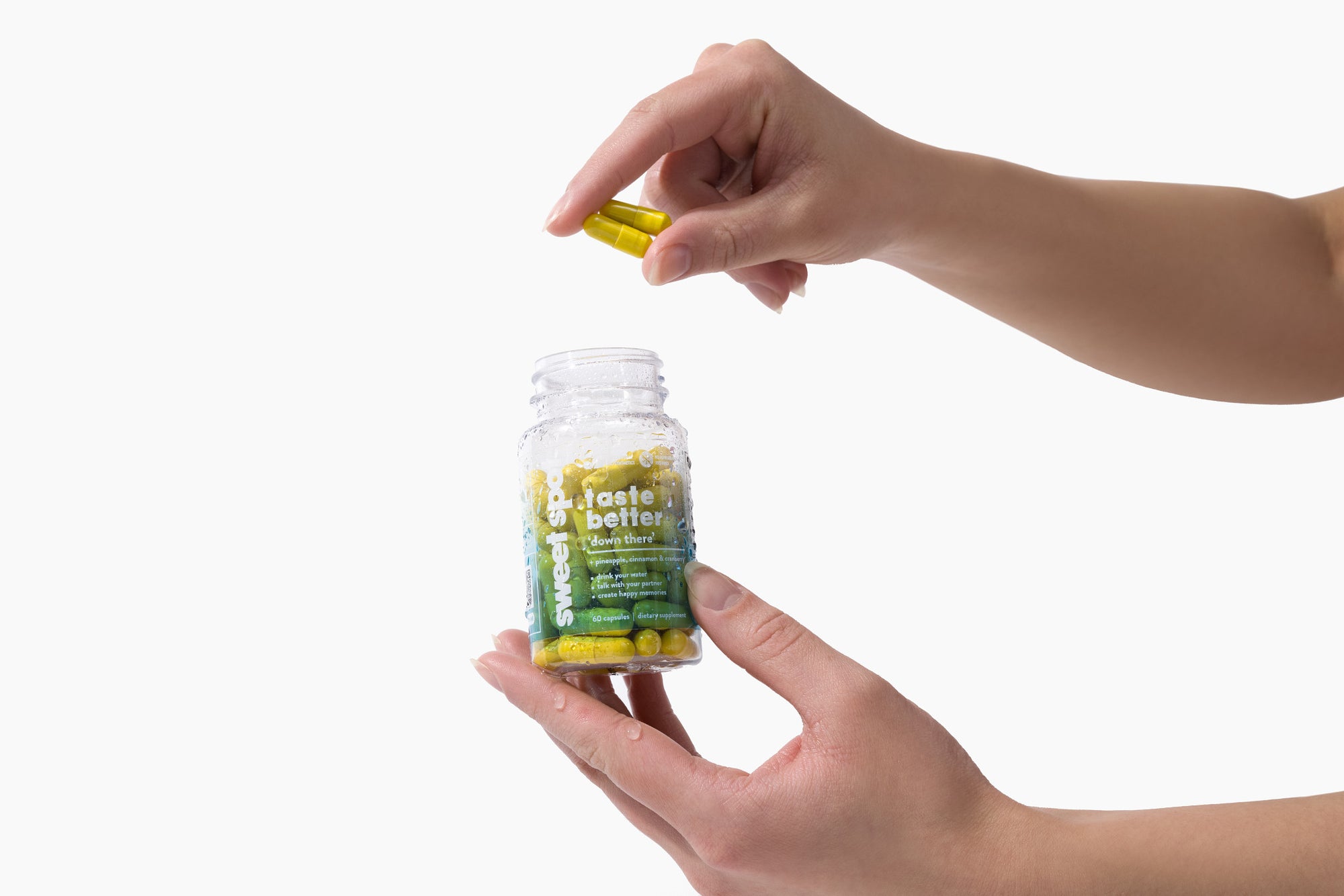
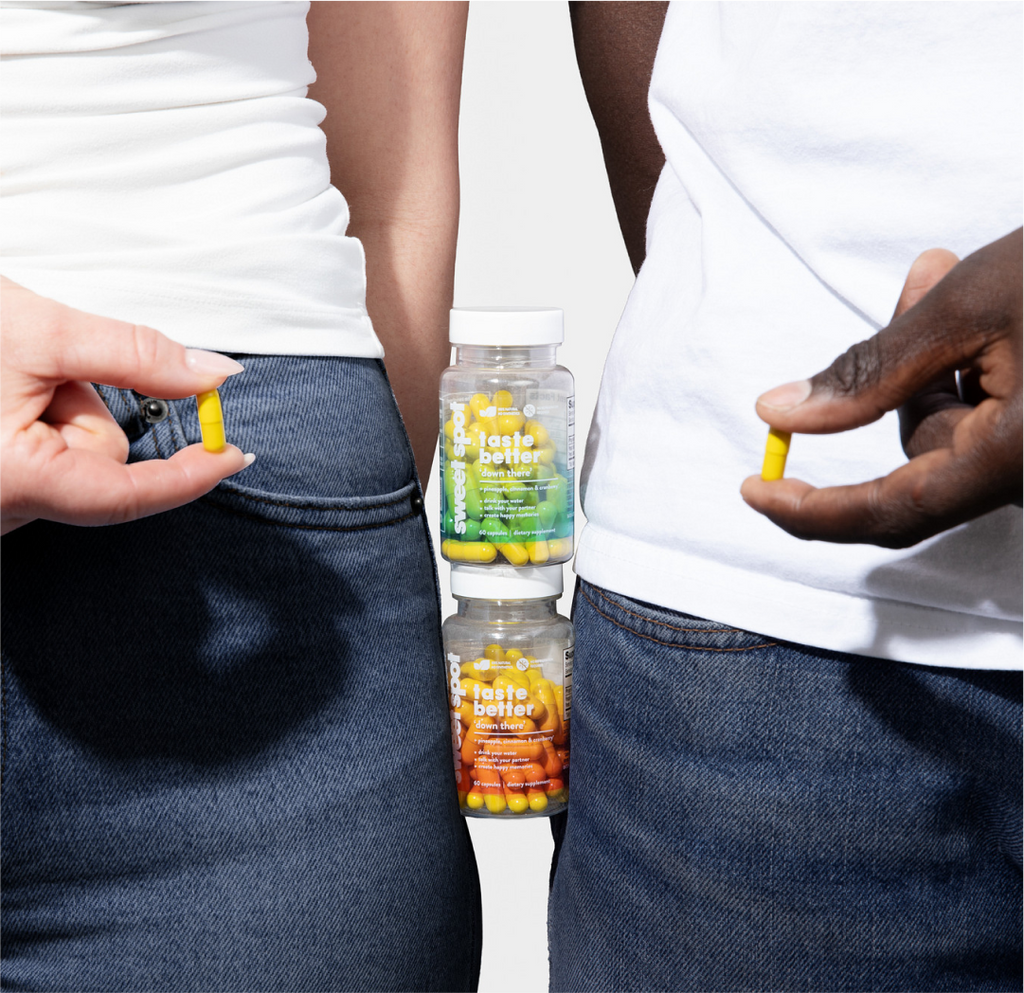
A range of pineapple-extract supplements and pH-balanced wipes made for intimate taste and freshness. There is a version formulated for women and one for men, sold separately or as a couples combo. Capsules come in 60, 120 and 180-count bottles; 60 capsules is a 30-day supply.

Read more: See the range

What is in the supplements?

Pineapple extract, which supplies bromelain, alongside cranberry and cinnamon. They are plant-extract supplements. They contain no live bacterial cultures, carry no CFU count, and are not probiotics.

Full ingredient and allergen information is printed on each product page and on the bottle. If you are checking for a specific interaction or allergen, read the label rather than this page — formulations change and the label is the source.

Read more: Product pages and full ingredients

Is there a version for men and one for women?

Yes. The men's and women's formulations are sold separately, and a couples combo covers both. The underlying approach is the same; the difference is in the formulation for two different sets of chemistry — semen is alkaline at 7.2 to 8.0, vaginal fluid acidic at 3.8 to 4.5.

Read more: His + Hers

How do you take them?

Two capsules a day with water, consistently. A 60-capsule bottle is a 30-day supply on that basis. Consistency matters more than timing, because the seminal and vaginal fluid this works through is produced continuously rather than stored.

Taking four on the day of a date does not compress the timeline. The biology does not work that way.

How long until the supplements work?

The same clock as any dietary change: earliest reports at 3 to 7 days, a settled result at 2 to 4 weeks. A 30-day bottle covers one full cycle of that. Hydration alongside is not optional — it does more than any capsule.

Are they safe? Any side effects?

They are food supplements made from pineapple, cranberry and cinnamon extracts. The most commonly reported issue with bromelain is mild digestive upset. People with a pineapple or bromelain allergy should avoid them, and bromelain may interact with blood thinners.

Two specific cautions worth stating rather than burying:

  • Blood thinners. Bromelain has been reported to affect blood clotting. Anyone taking anticoagulants should ask a doctor before starting.
  • Allergy. Pineapple allergy is uncommon but real, and bromelain sensitivity can present as mouth or lip irritation.

As with any supplement, if you are pregnant, breastfeeding, on medication or managing a health condition, check with a doctor first. That is a genuine recommendation, not a disclaimer.

Can you take them with birth control or other medication?

There is no known interaction with hormonal contraception. Bromelain may interact with blood thinners and may affect absorption of some antibiotics, so anyone on regular medication should check with a pharmacist. A pharmacist will answer this in two minutes and it is free.

Can you take them while pregnant or breastfeeding?

Ask a doctor first. There is no established safety data for bromelain supplementation in pregnancy or breastfeeding, and the honest position where data does not exist is to defer to someone who knows your history rather than to reassure.

Read more: Pregnancy and postpartum

What are the wipes for?

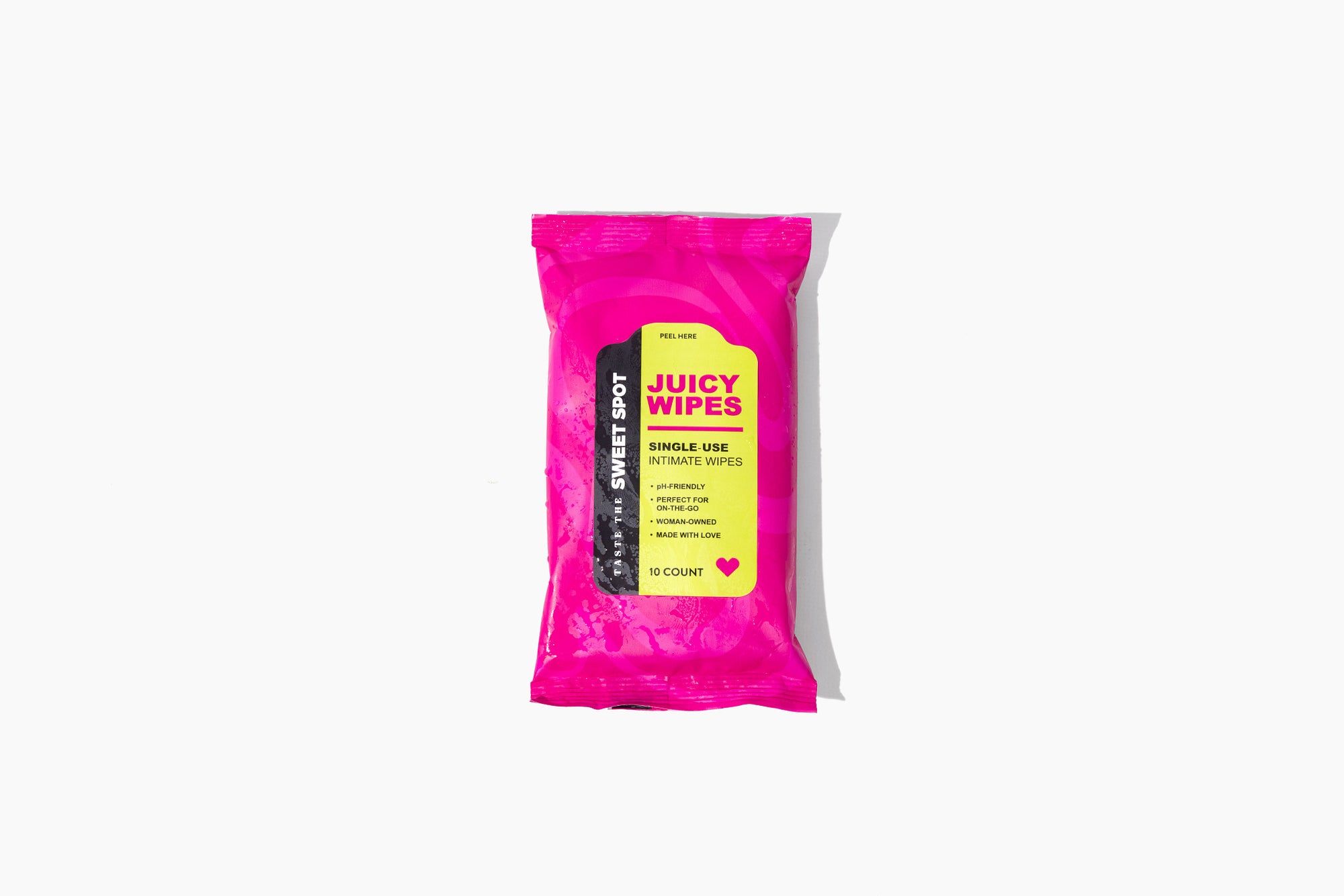
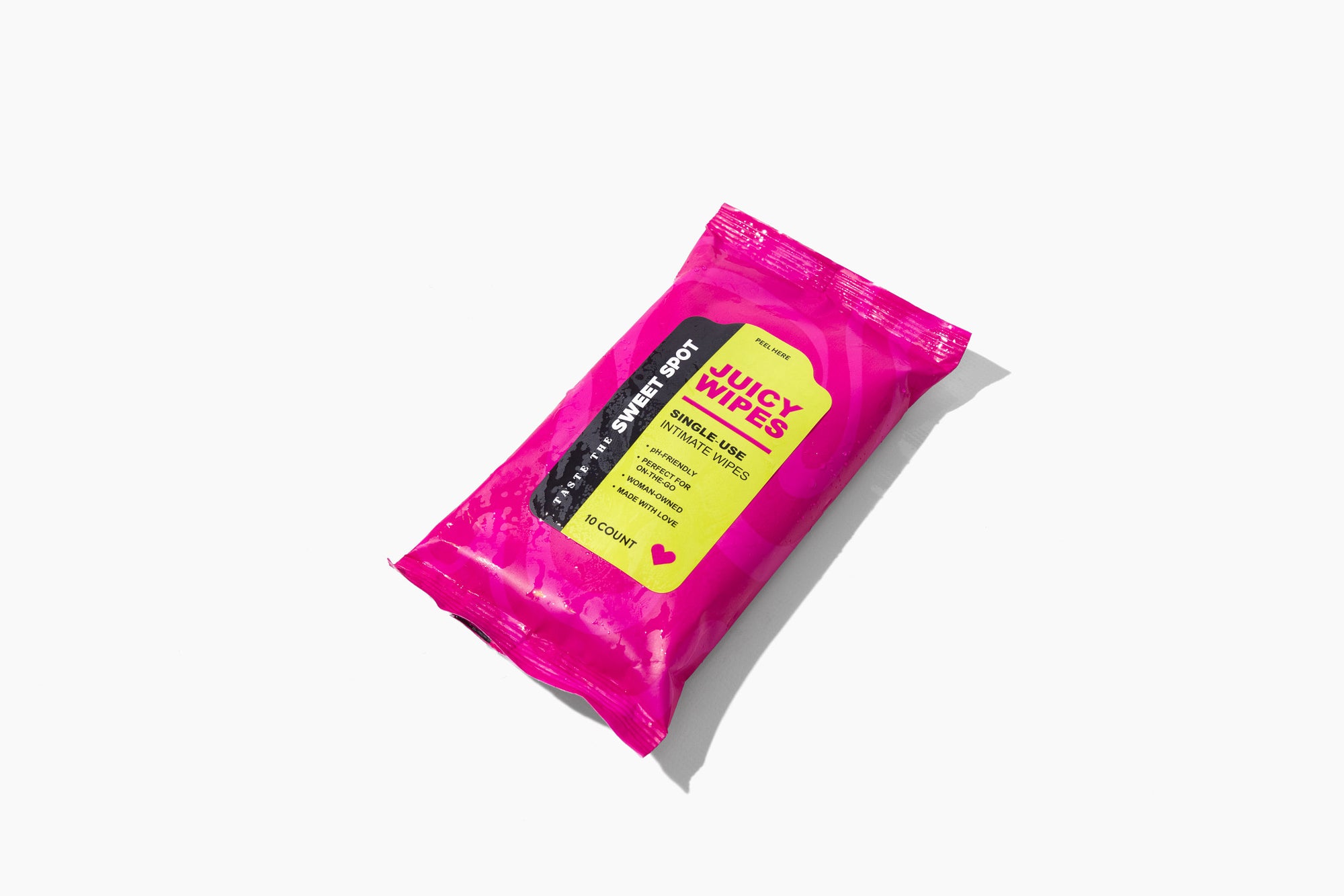
pH-balanced wipes for external freshening — before intimacy, after the gym, or when a shower is not available. They are for the vulva and surrounding skin, external use only, and they are not a substitute for washing or a treatment for anything.

The reason they are pH-balanced matters: normal vaginal pH is 3.8 to 4.5, and ordinary soap is alkaline. Using regular soap or scented wipes on that area raises pH, which is the condition odour-causing organisms prefer. Nothing goes inside.

Read more: The wipes

Do they help with odour as well as taste?

Taste and smell run on largely the same chemistry, so people who report a change in one usually report it in the other. What no supplement addresses is odour with a cause — bacterial vaginosis, an infection, or sweat sitting in synthetic fabric. Those need their own fix.

Are they vegan and gluten free?

Check the current label on the product page. Formulations and capsule materials change, and the label is the authoritative source rather than an FAQ answer that may be six months old.

Read more: Product pages

Limits, safety and what the evidence supports

The part most pages leave out.

Will a taste supplement fix an infection?

No. Nothing sold for taste or freshness treats bacterial vaginosis, a yeast infection, a UTI or an STI. Those are diagnosable conditions with effective treatments, and delaying one to try a supplement makes the problem longer, not smaller.

Signs that this is the answer you need rather than the rest of the page: itching, burning, pain, unusual or coloured discharge, a fishy smell, bleeding between periods, pain during sex, or any sudden change that came with symptoms attached.

What can a taste supplement realistically not do?

It cannot make semen taste sweet, because alkalinity is structural. It cannot treat infection. It cannot work in an hour. It cannot compensate for dehydration, and it cannot outrun a diet built on garlic, alcohol and red meat.

What people expectWhat is realistic
Tasting sweetLess bitter. Sweet is not available — pH does not permit it
An effect tonight3–7 days at the earliest, 2–4 weeks to settle
A replacement for waterNo. Hydration outperforms every supplement here
Fixing odour with a causeNo. Infection and trapped sweat need their own fix
Working regardless of dietNo. Removal of the worst foods beats any addition

Stating this costs us sales from people who wanted the other answer. It keeps the ones who were going to be disappointed in a month.

Read more: The full limits

When is a change in taste or smell a medical sign?

When it is sudden, when it is severe, and when it arrives with company — pain, burning, itching, blood, unusual discharge or fever. A gradual variation in taste, on its own, in someone who feels well, is chemistry rather than illness.

The pattern that matters is change plus symptoms. Neither alone is usually much; together they are worth an appointment.

Does any of this have scientific proof behind it?

Parts of it do and parts of it do not, and they are worth separating. Semen pH, vaginal pH and the harms of douching are established. The link between specific foods and how you taste is anecdotal — widely and consistently reported, never tested in a trial.

Claim on this pageEvidence
Semen is alkaline, pH 7.2–8.0Established. Standard semen analysis
Normal vaginal pH is 3.8–4.5Established. Cleveland Clinic, ACOG
Douching raises pH and is associated with BV and PIDEstablished. ACOG advises against it
Probiotic effects are strain and dose specificEstablished. Cochrane and 2025 systematic review
Dehydration concentrates and worsens tasteStrong reasoning, consistent reports, no trial
Specific foods change how you tasteAnecdotal. No controlled study exists
Bromelain reduces bitternessPlausible mechanism, unproven. Never tested for this

Every page in this category implies more certainty than the last. We would rather publish the table and let you decide which rows you are buying on.

Pineapple-extract capsules and pH-balanced wipes. 60 capsules is a 30-day supply.

The supplements these questions are about

FROM OUR AMAZING CUSTOMERS

Loved by Those Who Know

star_rating

“Happy I found this product and to change my diet at all and even happier I don't need to worry about taste down there!”

star_rating

“Really gives a great flavor when you're having some fun.”

star_rating

Works fast. And obviously WORKS.

star_rating

“This is hands down the best supplement I’ve tried — I’m obsessed and already repurchased.”

pill-image
star_rating

“My guy won’t stop going down on me. He says I taste like flowers and fruit. I’m not correcting him.”

AUTHENTIC REVIEWS YOU CAN TRUST

EXPLORE OUR PRODUCTS

More from #juicyvibes