

pH Balance Pills: What Works, What Does Not, and How to Choose
Short answer: most products sold as "pH balance pills" do not change your pH directly, and the ones that help do it indirectly — by supporting the lactobacilli that produce the acid in the first place. A healthy vagina sits at pH 3.8–4.5. That acidity is made by resident Lactobacillus bacteria converting glycogen into lactic acid. No capsule reaches in and lowers a number.
This page covers what vaginal pH actually is, what raises it, which supplement categories have evidence behind them and which do not, how to read a label, and the point at which a recurring problem stops being a supplement question and becomes a clinical one.
We sell supplements. We will still tell you plainly when a supplement is the wrong purchase — that section is further down and it is the most useful part of this page.
- Vaginal pH
- A measure of acidity from 0–14. Healthy is 3.8–4.5 — genuinely acidic. Above 4.5 is where bacterial vaginosis becomes likely, which is why a pH test strip is part of a clinical diagnosis.
- What actually makes the acid
- Lactobacillus species — chiefly L. crispatus, L. jensenii, L. gasseri and L. iners — metabolise glycogen in the vaginal wall into lactic acid. Support those and the pH looks after itself.
- “pH balance pills”
- Not a regulated term. It is a marketing category covering three very different things: live-strain probiotics, prebiotics that feed existing bacteria, and general vitamins/minerals. They are not interchangeable, and only the first has direct trial data.
- Prebiotic
- A compound that feeds bacteria you already have, rather than adding new ones. Usually a fibre or oligosaccharide.
- Suppository
- A capsule or pessary inserted vaginally rather than swallowed. It puts the active ingredient where it is meant to act, skipping digestion entirely.
- Boric acid
- A vaginal suppository used for recurrent BV and resistant yeast. It has real clinical use as a second-line option — and it is toxic if swallowed. It is not a daily wellness supplement.
- Supplement
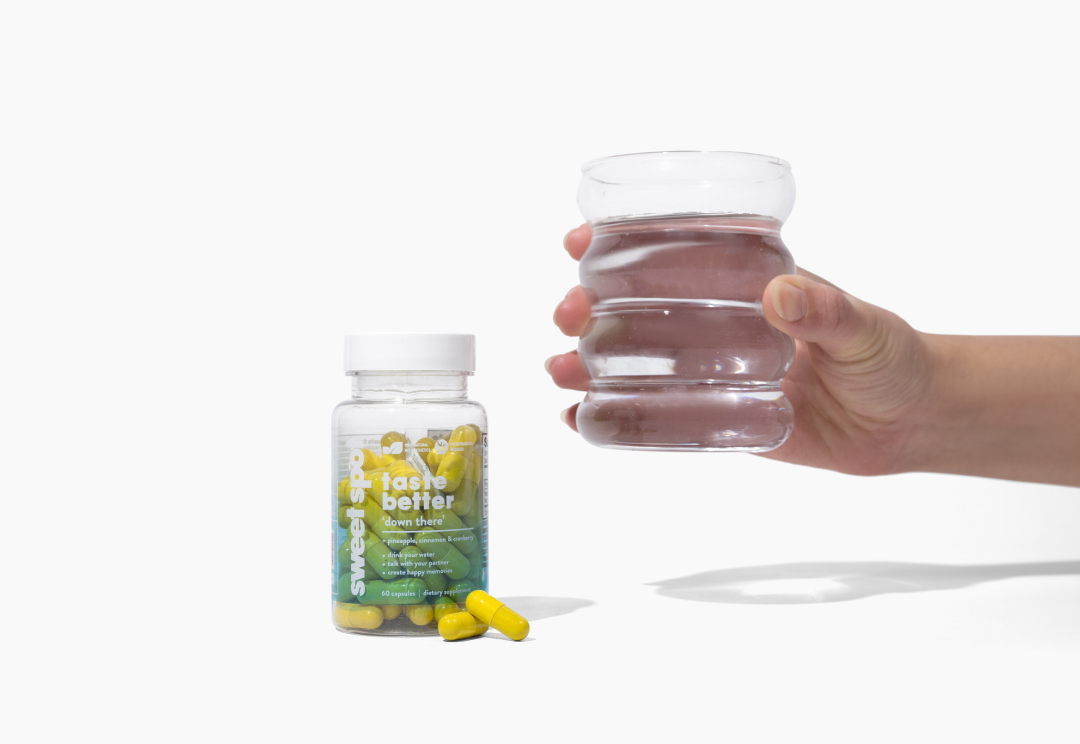
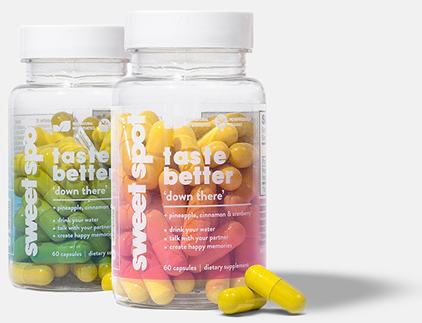
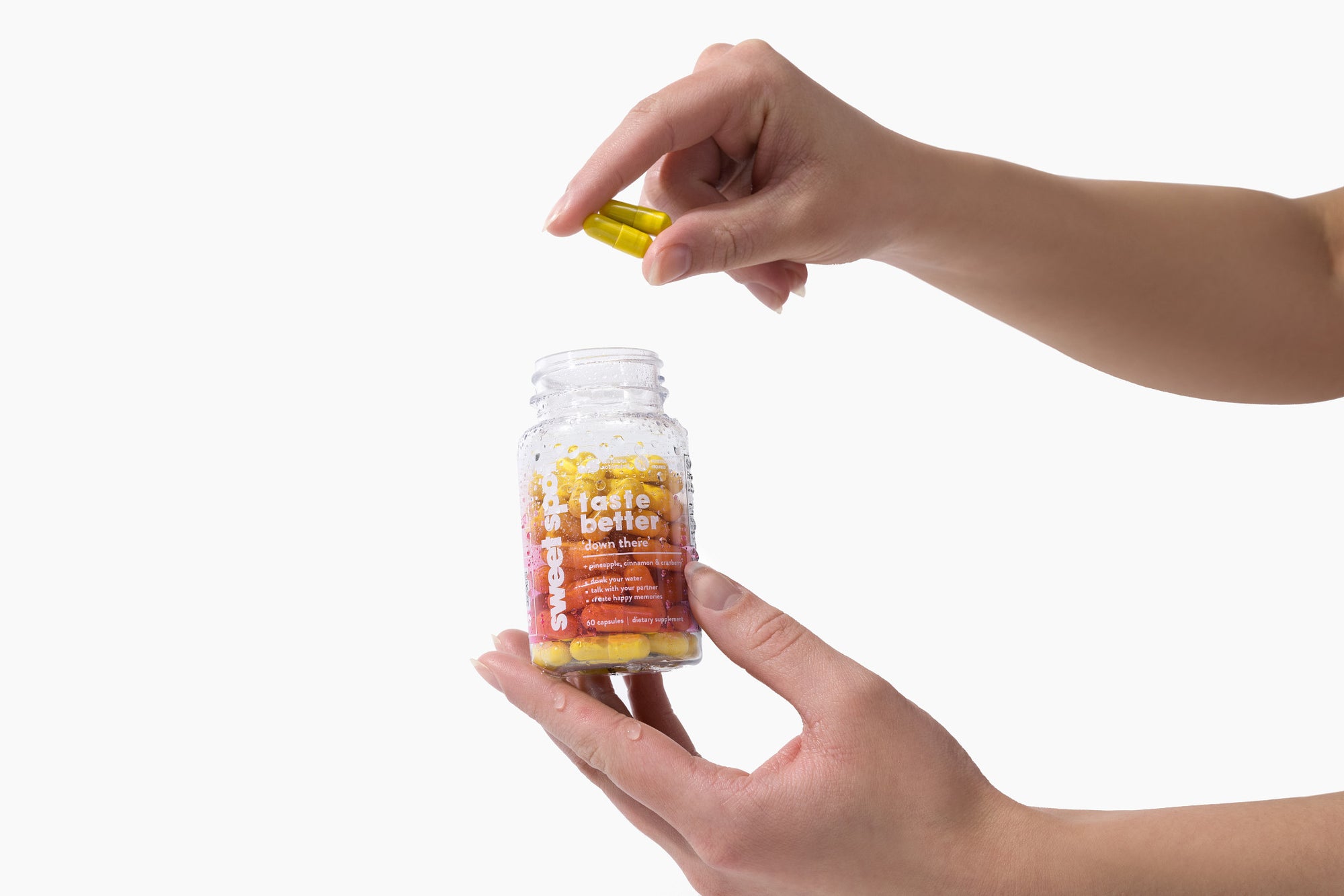
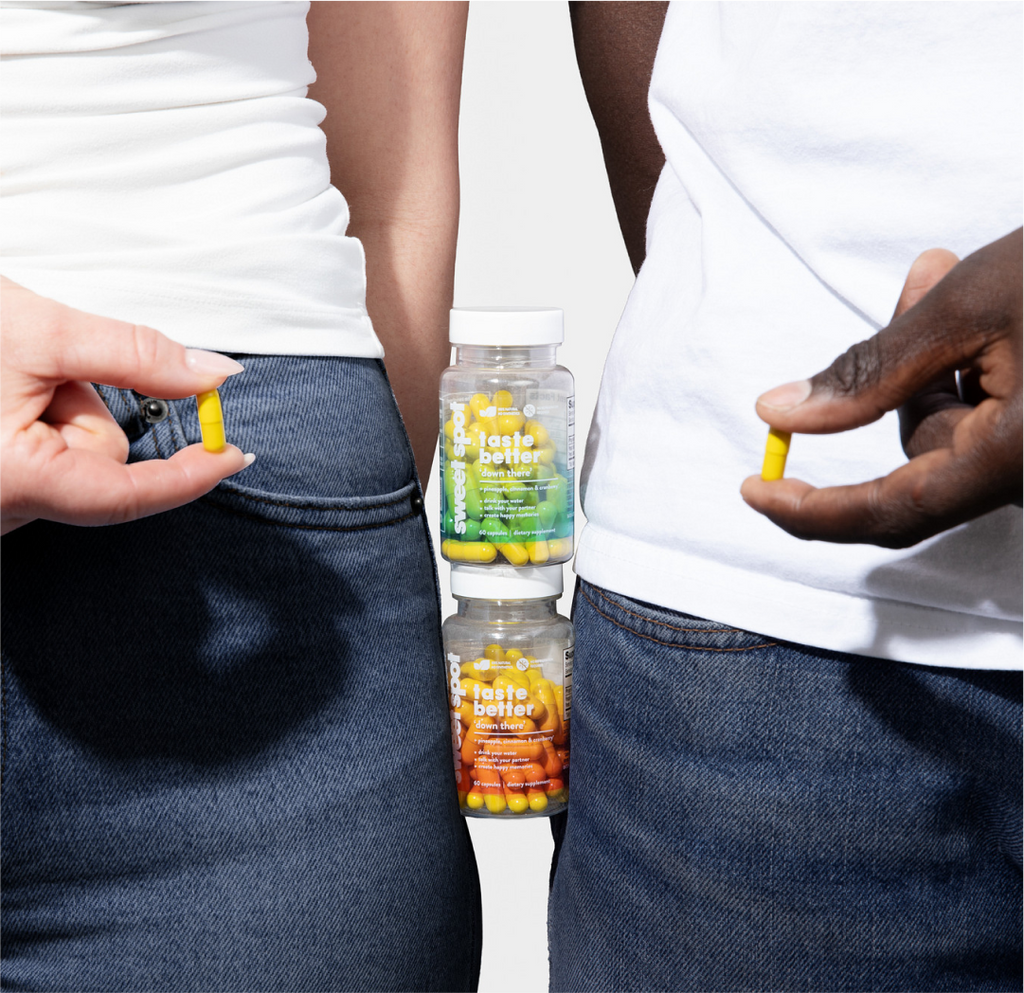
- A concentrated dietary input in capsule form. Our products are pineapple-extract intimate wellness supplements. They are not probiotics, they name no bacterial strains, and they are not a treatment for any infection.
What actually raises vaginal pH
Almost everything on this list is behavioural, which is the good news — behaviour is free to change and no capsule competes with it.
- Douching. The single most damaging thing you can do. It flushes out the lactobacilli that hold pH down, and the rebound is worse than the original problem.
- Scented washes, wipes and "feminine hygiene" sprays used internally. Same mechanism.
- Semen. Alkaline at pH 7.2–8.0. It raises vaginal pH for several hours after unprotected sex — entirely normal, and the usual reason odour is strongest afterwards.
- Menstruation. Blood is close to pH 7.4, so pH rises during a period.
- Antibiotics. They do not distinguish between the bacteria causing your infection and the lactobacilli you want to keep.
- Menopause and low oestrogen. Less glycogen in the vaginal wall means less fuel for lactic-acid production, so pH drifts up.
Notice what is not on that list: diet, sugar, and most of what supplement marketing blames. Diet influences odour and taste. It is not the main lever on pH.